Journal · Feature · Antarctica
The Night the Ship Couldn't Dock
A ship turned away from the Ushuaia pier, a night of improvised plans followed, and a town used to ships pitched in.
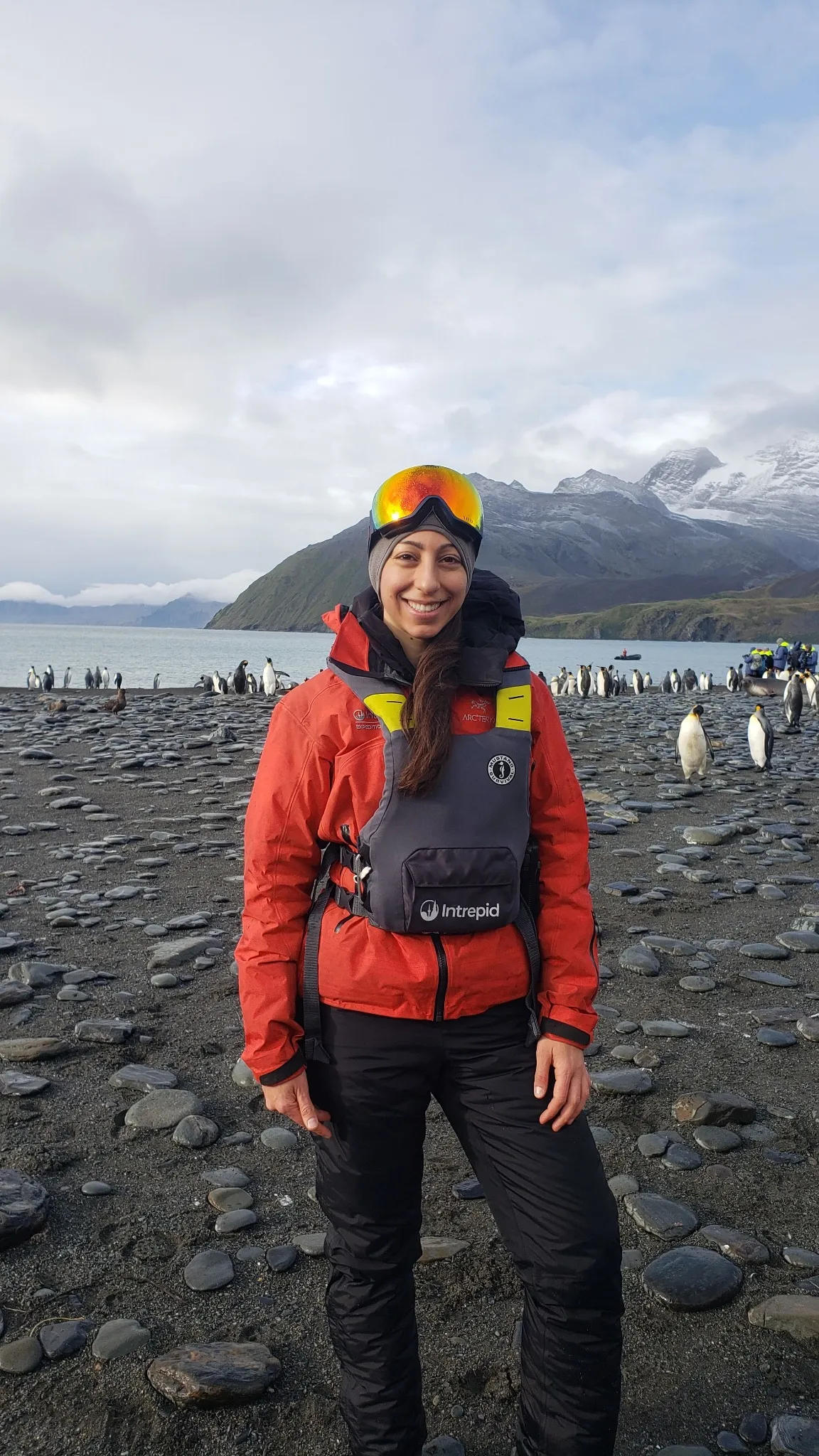
At about five in the afternoon, the ship finally had a berth.
Anita stood in the port at Ushuaia with two hundred guests around her, watching the vessel edge towards the pier. She had pushed the port agent for any slot at all, and this was the one she got: an hour to bring two hundred people off and put two hundred more on. In a WhatsApp group, the ops team watched the same pier on the port camera.
The ship crept closer. She let herself get excited. Then she turned away for a moment.
“And I turn around and then I turn back and the ship is leaving the pier and I’m like, what?” she says. “It’s me there in the port with all the passengers and we all see the ship go away again.”
I remember that day clearly. I was one of the managers she was messaging, from a holiday on the other side of the world. Anita is now part of the network we work with at Expeditioner, and to understand why she was the one standing on that pier, you have to go back to a pair of rollerblades in Buenos Aires.
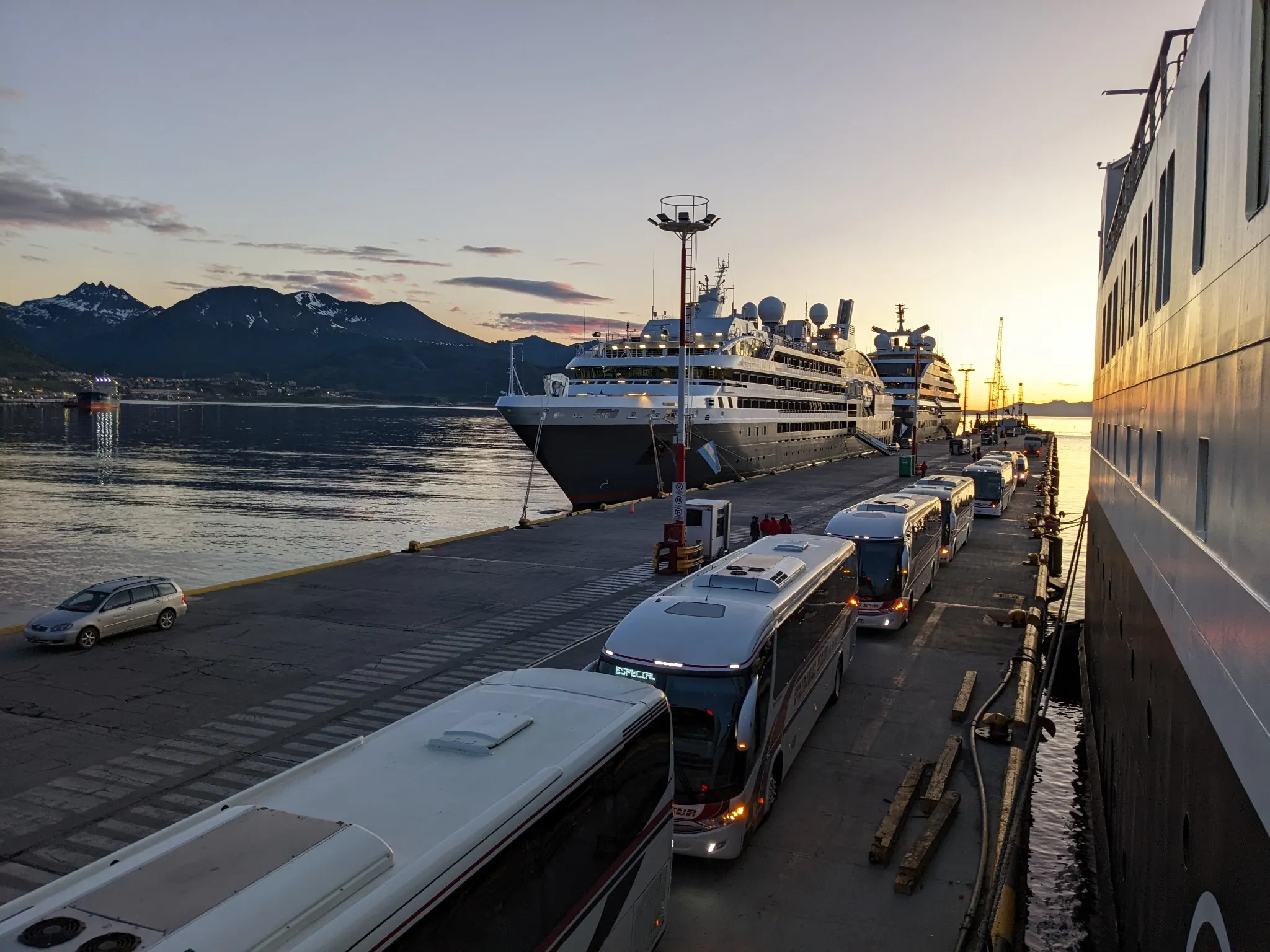
“Can I try?”
In 2019, Anita was working in real estate in Buenos Aires and, as she puts it, “in a time in my life that I wanted some change”. A contact had introduced her to an Australian who was refitting an expedition yacht in the city, and she was sending him photos of apartments over WhatsApp.
One day she was rollerblading near her house, messaging him as she went, when he asked whether she knew anyone who wanted some part-time work.
“Can I try?” she asked.
He called her. “Do you even know what I do for a living?” She didn’t, beyond a hazy sense that it involved Antarctica and possibly mining. A couple of days later, she was there.
“He took a leap of faith there,” she says. So did she.
His company was Spirit of Sydney Expeditions, a very small operation, and Anita became his right hand. Over three or four years she learned flights to Antarctica, superyachts, submersibles, helicopters and permitting with the Australian Antarctic Division, and taught herself the Antarctic Treaty, IAATO guidelines and environmental protocol. I remember her from those IAATO meetings: on video, an animated cloud drifting behind her, asking pointed questions while most of the room sat back.
When COVID hit, Spirit of Sydney Expeditions operated the only two ships to go south that first season, before vaccines. Anita wrote the COVID management plan, enforced it on superyachts while the rules kept changing, and pleaded with authorities for exceptions. Official updates were slow, so she followed bloggers who were friends with airline staff. “I had the information before the news did for some things.”
Another leap
When Intrepid was gearing up for its first Antarctic season after COVID, I hired Anita to run ground operations in Ushuaia. I had heard enough about her years at Spirit of Sydney to be confident: if she could handle that, she could handle most of what this industry would throw at her. For her, it was “another leap of faith”, from a 12-passenger yacht to a 200-passenger ship.
Ground operations is the part of an Antarctic trip guests aren’t meant to notice: “all the little things that you don’t think about but are going on behind the scenes so they have a good experience.”
Guest lists, transfers, luggage, pier space, port agents, and flights, which she calls the “main, main problem”. At the icebreaker evening before departure she also did a stand-up set, because “I always tried to make them laugh.”
Most days, it all went to plan. On the other days, she says, “Usually it all started with me getting a call.”
The Night the Ship Couldn’t Dock
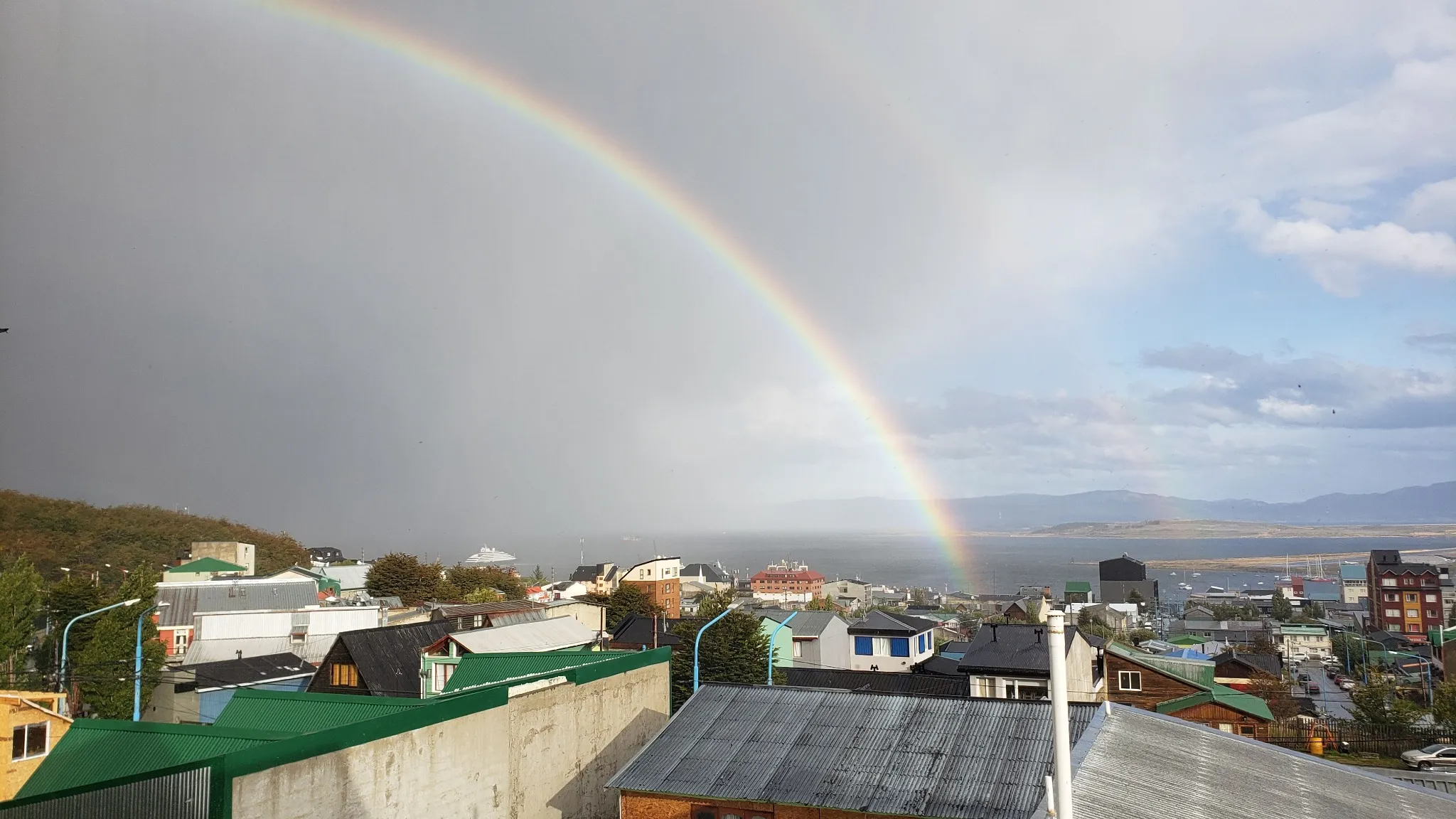
On the worst day of her time in ground ops, it was a message from the catamaran operator. With no usable berth at the Port of Ushuaia, the ship had to wait at its mooring and shuttle every guest and bag by catamaran, because the port didn’t allow guests ashore by Zodiac. Now the forecast showed a lot of wind, and in winds above 30 knots, as she recalls, the catamarans stop.
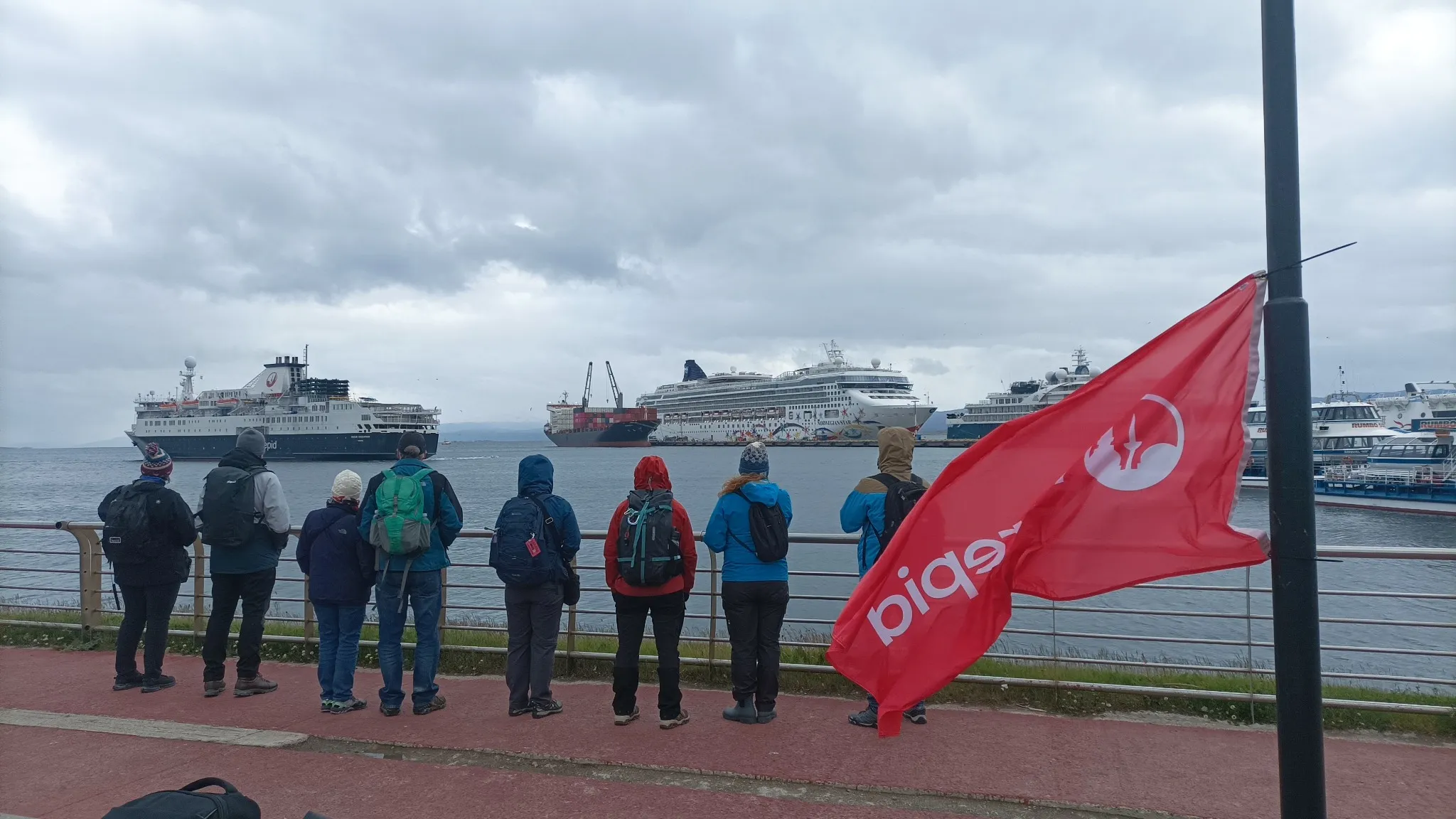
Intrepid’s management team, me included, was on holiday in Australia and New Zealand over the Christmas period. So Anita started a WhatsApp group, put all of us and the ops team in it, and told us: “This situation is not under control. I need help.”
Help meant money for hotel rooms and dinners, for two hundred people who might not get off the ship and two hundred more who might not get on. She worked through Plan A, Plan B and Plan C, including a scenario where 400 people needed a bed for the night, and pushed us to draft a message for the guests, because on board everyone still thought things were fine.
Then a berth at the port opened up, but on approach, the vessel had turned around due to high winds.
The call from the ship said they would try again in an hour or two. So Anita gathered everyone in the port and sent them to dinner on the company. “Go have dinner… come back in 2 hours. We’re going to try this again.”
The second attempt worked. By then most of the guests leaving that day had missed their flights, and only those on the last plane out still had a chance. Anita went to the airport.
In my head, this part was an action scene: Anita running onto the tarmac and stopping the plane in its tracks. She would like to correct the record. “It wasn’t like an action scene, it was more of like a please help me kind of situation.”
The Aerolíneas Argentinas staff listened. “They understand these things and they waited, they waited for them.” They checked her passengers in within about ten minutes, and everyone on that flight made it. Everyone else went to the hotel rooms she had fought for, and flew out the next day.
The town that waits
Ushuaia, she says, is small enough and used enough to ships that people pitch in. On another late-ship day she walked into the Aerolíneas office in town with a list of passengers, “barely any information, first name, last name, and a t-shirt that said Intrepid”, and the staff moved every one of them to a later flight. “The people are really helpful,” she says. “So they understand these situations and they do help.”
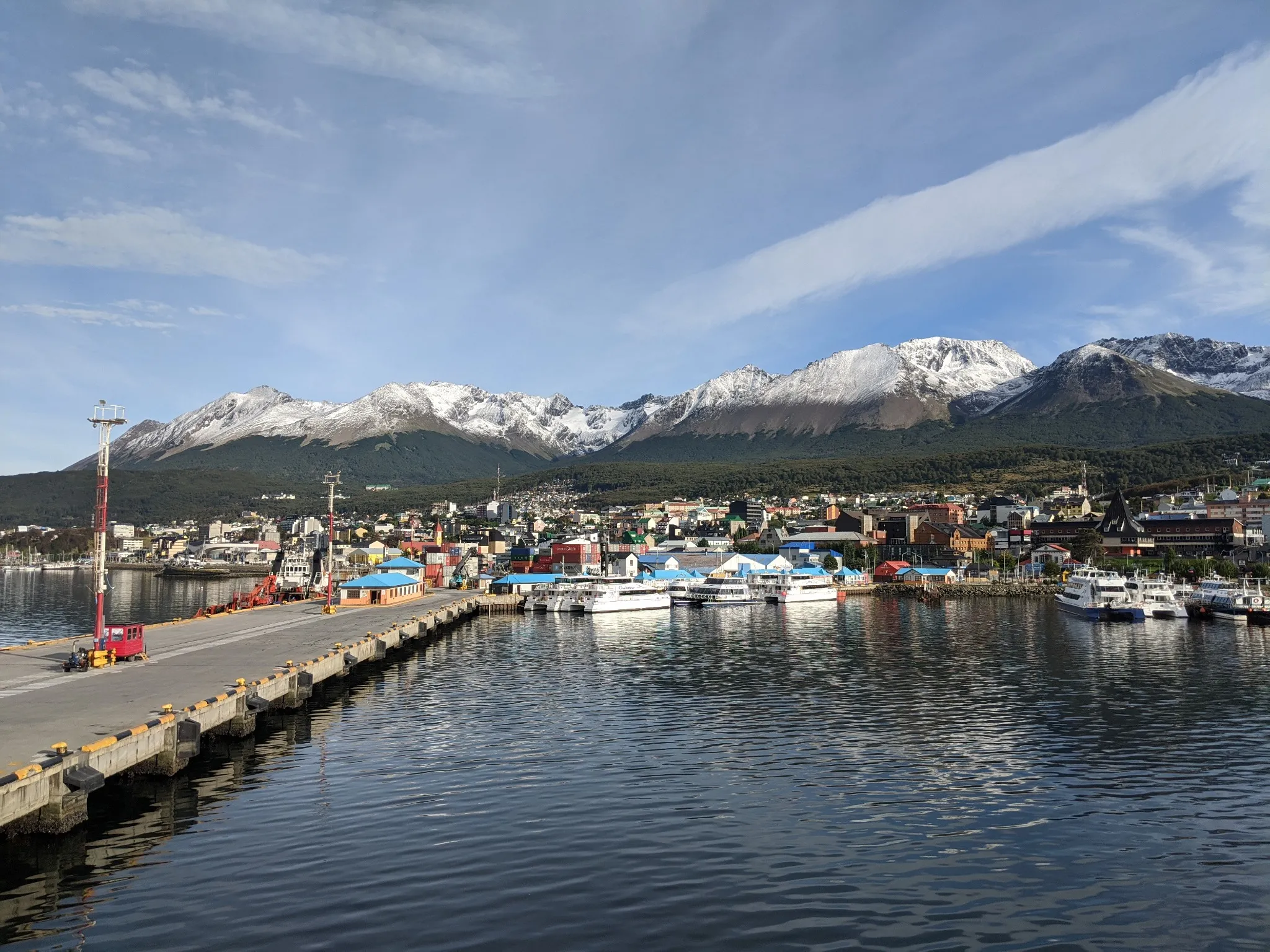
Many avoided missing their onward connections because they had a night in Buenos Aires. It was the first piece of advice she gave me for anyone heading south. Domestic flight times have become “really unpredictable”, so “connecting the international with a domestic flight is definitely not a good idea.” Spend a night in Buenos Aires on the way down, at least one in Ushuaia before you sail, and book an afternoon flight out on the way home.
She has rescued my own family, too. When my parents went to Antarctica, their luggage didn’t make it to Ushuaia, so Anita took them shopping. “I do remember your dad trying on clothes in the mall in Ushuaia. Oh my God, it was very funny.” It is not, she points out, a standard service. “I don’t take everyone shopping for gear. It was just because they were your parents.”
For everyone else, she recommends a carry-on “survival kit”: base layer, gloves, beanie, puffy jacket, socks, underwear and wet-weather pants. As she remembers it, two or three bags in every two hundred guests don’t show up. With the kit, it hardly matters.
When I asked what keeps her calm when everything goes wrong, she didn’t mention checklists. “What keeps me calm is working alongside a team that I know they’re doing the right thing and they have my back.”
The leap for everyone else
For all the drama, Anita is firm that days like that one are rare. “I don’t think people should be afraid of this. I think generally in most cases things go pretty smooth.”
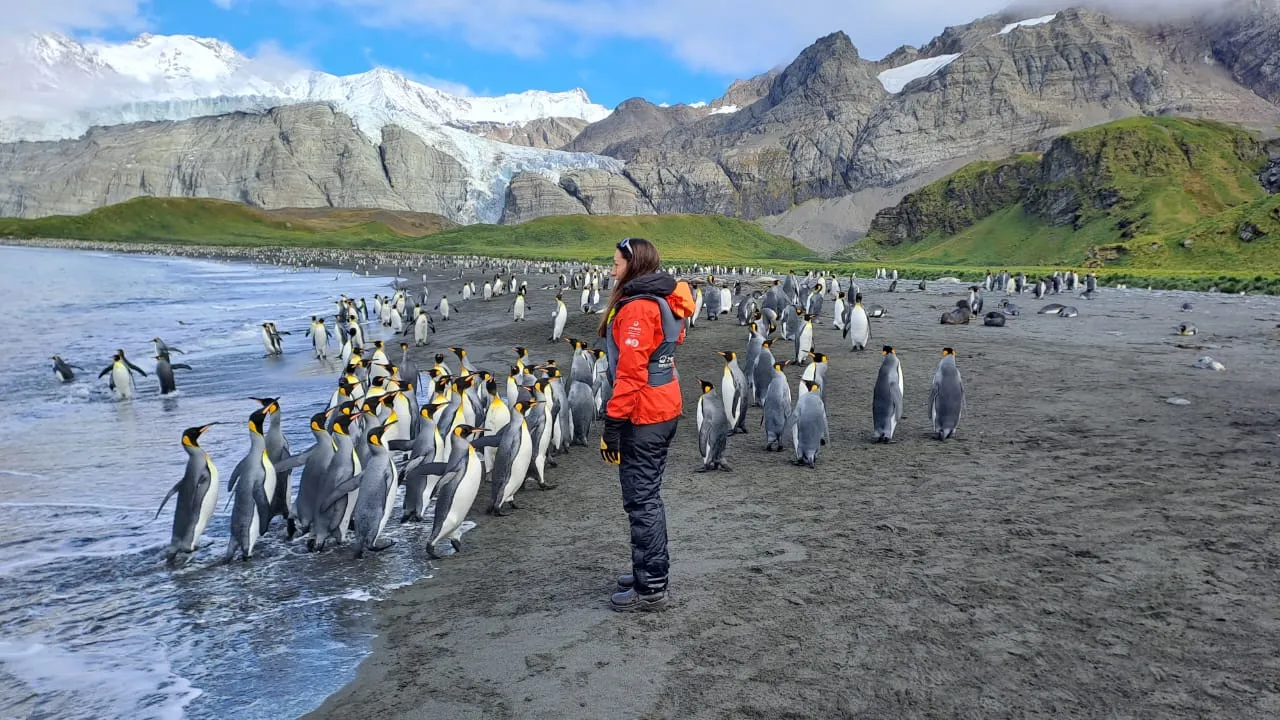
Booking Antarctica is its own leap of faith: long flights, two days on the Drake, and an internet full of contradictory advice, including, she says, people insisting you won’t see penguins if you go in March. Her answer is to talk to someone who has actually done the trip, whether that’s an experienced travel advisor or someone on the operator’s team. “You can speak with someone who’s done it who knows what you’re going to go through and can kind of walk you through it. And so you can feel like, oh, I got this, this is pretty easy, this is how this is going to work.”
Seven years ago, she asked a near-stranger, “Can I try?” These days, she’s the one helping other travellers say, “I got this.”
About Anita
Anita is an Antarctic operations specialist from Buenos Aires. Since 2019 she has worked on the logistics behind expedition travel: first as right hand to the owner of Spirit of Sydney Expeditions, covering permitting, flights to Antarctica, submersibles, helicopters and COVID-era operations, then running ground operations in Ushuaia for a 200-passenger vessel at Intrepid. Her real name is Ana; “Anita” is the childhood nickname she never dropped. Anita is part of the Expeditioner network.