Journal · Feature · Antarctica
How to Choose an Antarctic Expedition
What 50+ voyages taught me about picking the right season, route, ship and operator
There’s a moment I’ve watched play out on more than fifty voyages in Antarctica, and it still gets me every time.
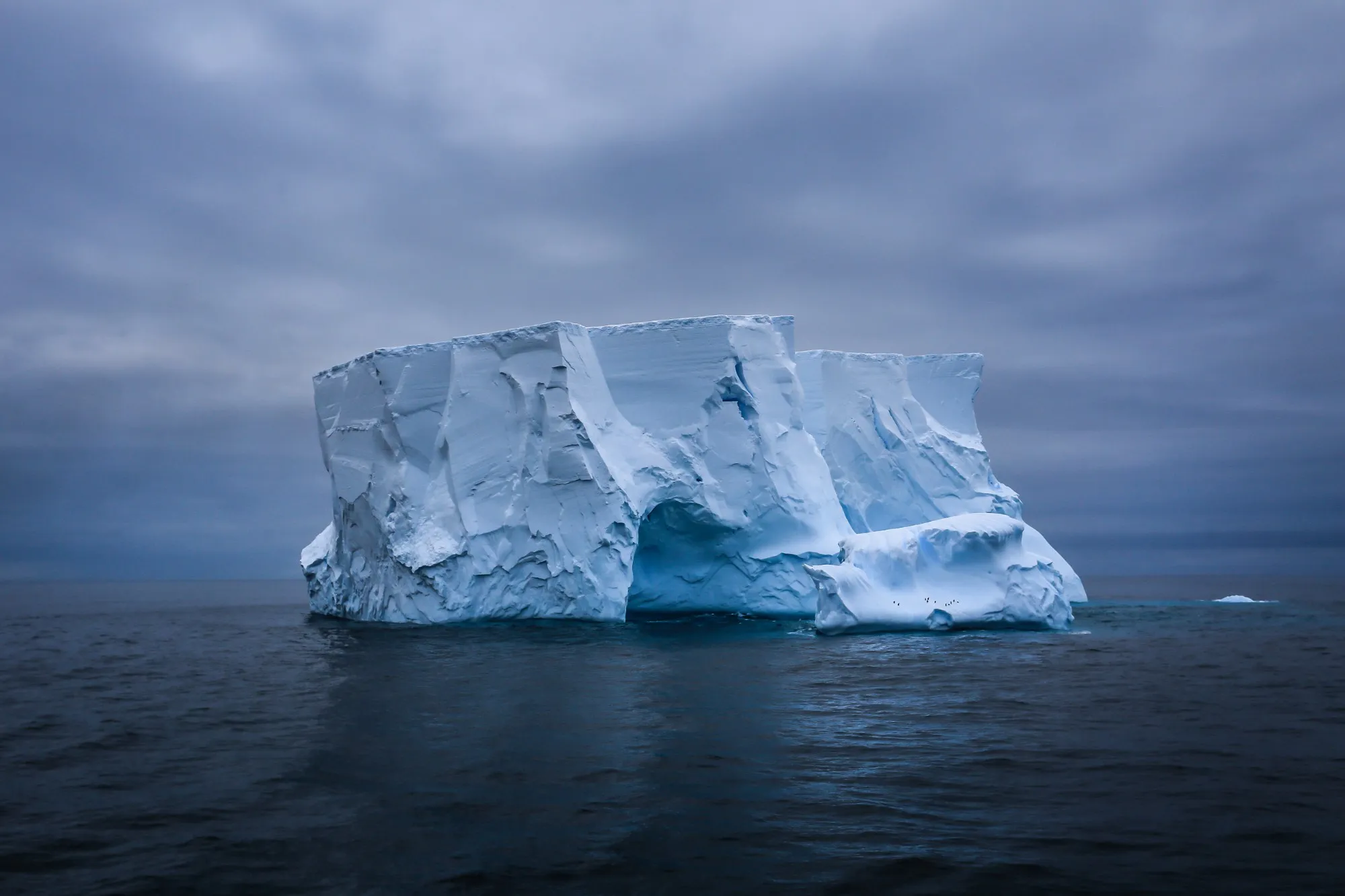
It’s usually day two on the Drake Passage. The ship has been rolling south out of Ushuaia, people have been to a few lectures, swapped stories over dinner, and maybe spent a quiet afternoon out on deck admiring the albatross that follows the vessel. Then somewhere around the Antarctic Convergence, the water gets colder and the fog thickens to a complete whiteout. It’s an eerie feeling sailing in the fog, until it starts to fade away and someone out on deck spots the first iceberg. A few minutes later, a penguin porpoises past the bow. Then the fog lifts completely, and there it is: the mountains of the Antarctic Peninsula, sitting on the horizon like they’ve been waiting for you.
I don’t look at the mountains anymore. I look at the faces. You can see the whole trip land on people in about three seconds.
The ship you’re on, the month you go, the route you take and the company you travel with all shape how much of that feeling you get to keep. And they’re the questions people ask us at Expeditioner more than anything else: How do I actually choose?
So here’s everything I know, from years of guiding down there, about choosing an Antarctic expedition.
Some of it you’ll find in brochures. A lot of it you won’t.
In this guide12 sections
The one idea that changes everything
If you only take one thing from this guide, make it this: in Antarctica, the real luxury is time off the ship.
Not the thread count. Not the balcony. Not the butler. Time. Time standing on the continent, time in a Zodiac nosing between icebergs, time sitting on a rock doing nothing at all except listening to the ice creak and the penguins argue.
The single biggest thing first-timers misunderstand is that every operator and every ship will give them roughly the same amount of that time. They won’t. Not even close. Some operators run ships where only half the passengers can get off at once. Some only carry enough Zodiacs for half the people on board, which, when you think about what you’ve paid to get there, is a bit mad.
Almost every decision in this guide comes back to that one question: how much of my trip will I actually spend out there?
The four decisions
Choosing an expedition comes down to four variables:
- When you go (early, middle or late season)
- Where you go (the itinerary)
- Which ship you’re on (and especially how many people it carries)
- Who runs it (the operator and their expedition team)
Let’s go through them one at a time, and I’ll tell you where I’ve landed on each after a lot of seasons down there.
When to go: early, middle or late season
The Antarctic season runs from roughly November to March. I’ll say this up front, because people worry about it: there’s no bad time to go. It comes down to your availability and what you want to see. But each part of the season has its own personality.
Early season (November to early December)
Antarctica has just come out of winter. Everything is still under a thick blanket of snow, the peaks are white top to bottom, and it looks like the Antarctica you pictured as a kid. It’s classic. A proper winter wonderland.
You’ll still get some real Antarctic weather in November, the odd snowstorm, but you’ll also get some of those clear, still, blue-sky days. The penguins are back and starting to nest, and you’ll see some lovely courtship behaviour (pebble-stealing, head-bobbing, the works). Don’t expect eggs hatching or chicks yet, though. The humpbacks haven’t fully arrived either, but you’ll still see the odd humpback and minke whale, plus crabeater seals and others.
Two big reasons to go early. First, you still get proper evenings. The sun actually sets, which means golden-hour glow over the snow, and photographers go a bit weak at the knees for it. Second, it’s shoulder season, so you can often pick up a good deal, especially in early November.
One thing you can’t do early: cross the Antarctic Circle. There’s simply too much sea ice in the way.
Early season suits: landscape photographers, people who want Antarctica at its whitest, and travellers watching their budget.
Mid season (mid December to January)
This is peak season, and it’s busy mainly because of the Christmas and school holidays. The weather is at its most stable, and the wildlife is in full swing. Chicks start hatching and turning into little grey fluffballs. The humpbacks are arriving to feed on krill. You’ll see crabeater, Weddell, fur and elephant seals, and this is a great time for orca. An emperor penguin would be a rare bonus on a standard Peninsula voyage.
The landscape shifts too. The snow starts thawing, so the penguin colonies, many of which sit on rocky outcrops, are about half snow and half rock. Glaciers get active, with more calving and more icebergs being born. And the sea ice further south begins to break up, opening the passages that let ships get below the Antarctic Circle.
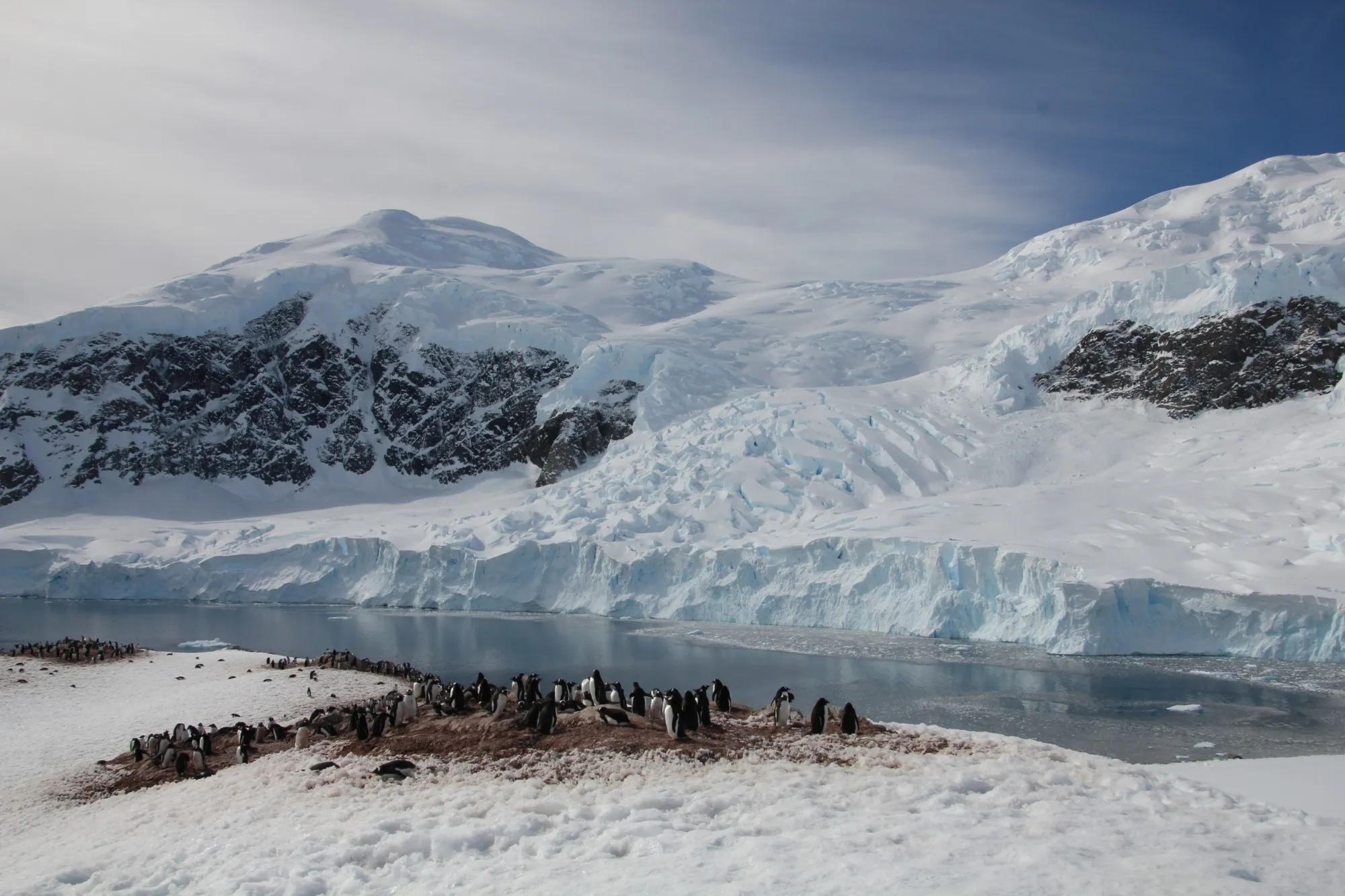
The trade-off is light. The summer solstice is 21 December, and around then it barely gets dark on the Peninsula. The sun dips toward the horizon, you get this strange, soft polar twilight, and then it comes back up again. It’s surreal and lovely, but you won’t get the glowing sunsets and sunrises. If you’re a landscape photographer, January isn’t your month. It’s just too bright.
You’ll also see other ships around. It’s the Peninsula at its busiest.
Mid season suits: people who want Antarctica at its peak and are happy to pay top dollar for it, and anyone who needs to travel over school holidays or in a gap between work commitments.
Late season (February to early March)
This is my favourite. I’m not even going to pretend to be neutral about it.
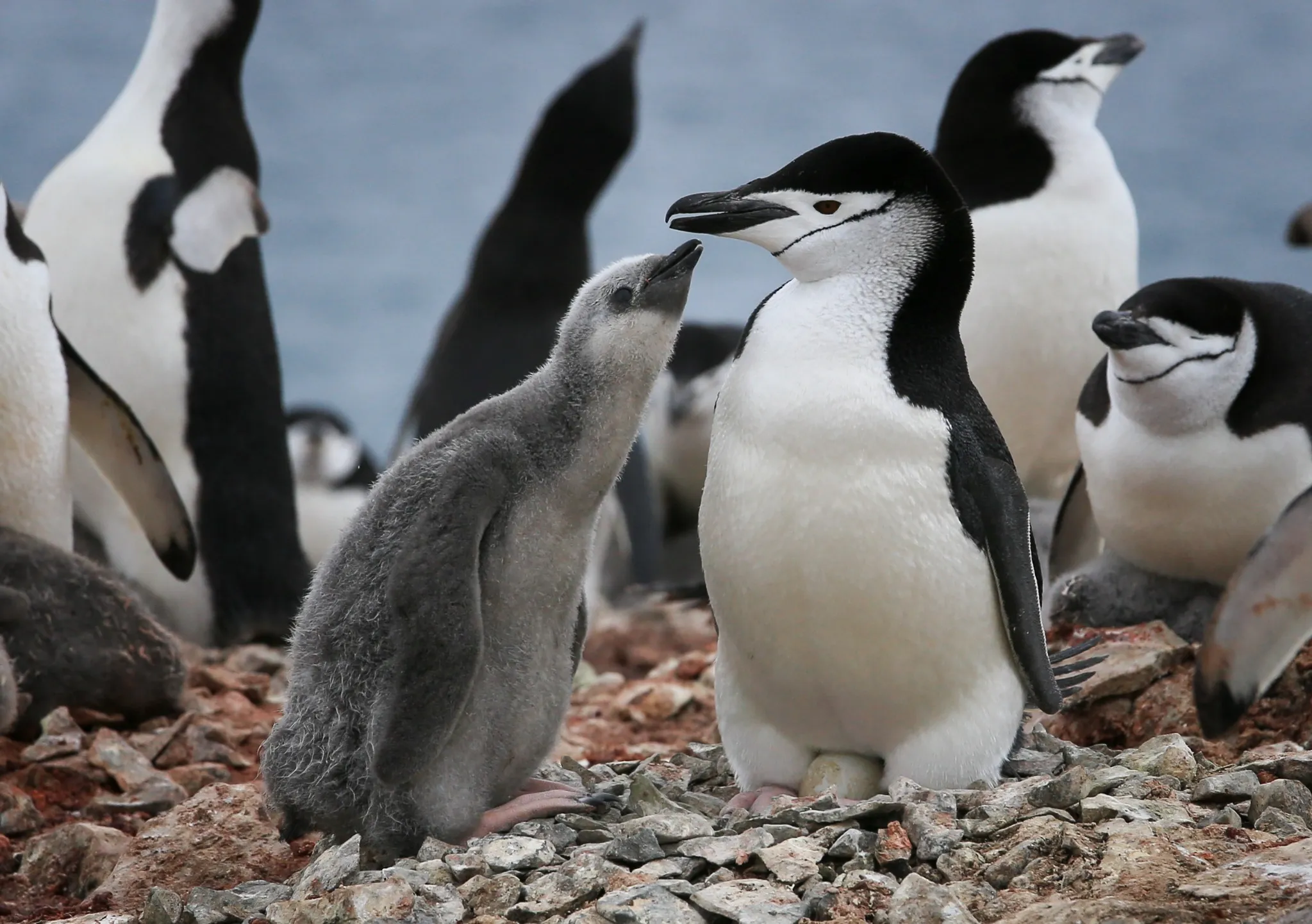
By February, the penguin chicks are older, fluffier and completely ridiculous. They’ve left their nests and are running around in gangs, chasing their parents for food, crashing into each other, and coming over to investigate you. Sometimes they’ll even peck at your trousers out of pure curiosity.
This is also when the humpbacks are really going for it. They’re mid-migration and feeding hard in the open bays where krill gathers in huge numbers. There are days when every fjord is just whale soup. I’ve had countless close encounters with curious humpbacks in Wilhelmina Bay and around the Gerlache Strait at this time of year, and there are usually plenty of orca around too.
The light comes back as well. The days get shorter and the sun sets properly again, so you get beautiful evenings and early mornings. One late-February morning on the Weddell Sea side of the Peninsula, we woke up to a sunrise that lit up every iceberg and peak in gold. Everyone on deck went quiet. I still think about that morning.
My sweet spot is late February into early March. I wouldn’t go too far into March, though, as the season starts winding down.
Late season suits: wildlife lovers, whale fanatics, photographers who want both animals and light, and anyone looking for value, as you can often find good deals in late February.
| Early (Nov–early Dec) | Mid (mid Dec–Jan) | Late (Feb–early Mar) | |
|---|---|---|---|
| Landscape | Deep snow, pure white | Half snow, half rock | Snow receding, more rock contrast |
| Penguins | Nesting and courtship | Eggs hatching, first chicks | Big fluffy chicks running around |
| Whales | Some humpbacks and minkes | Humpbacks arriving, orca | Humpbacks everywhere, orca |
| Light | Real sunsets and golden hour | Near 24-hour daylight | Sunsets and sunrises return |
| Antarctic Circle | Usually blocked by ice | Becoming possible | Best chance |
| Price | Often good deals | Highest | Often good deals |
Where to go: choosing your itinerary
There are three main itineraries, and they mostly come down to how much time and money you have.
The Classic Antarctic Peninsula (about 11 days, 10 nights)
This is the most common trip. You sail out of Ushuaia in Argentina, take two days to cross the Drake Passage, spend about four days on the Peninsula, then two days back across the Drake to Ushuaia.
Four days is a good introduction. You’ll explore around the Gerlache Strait, typically get as far south as the Lemaire Channel, make a continental landing (actually stepping onto the Antarctic mainland), probably have a barbecue on deck and, if you’re brave, do the polar plunge. You’ll come home satisfied.
If you’re short on time or money, this is the trip for you, and you’ll have a great time. But here’s the thing I want you to know.
Crossing the Antarctic Circle (about 14 days, 13 nights)
On paper, this trip is about getting south of the Antarctic Circle, the line at about 66°33′S where, on the summer solstice, the sun doesn’t set at all. It’s hard to reach, it’s an achievement, and ships that get down there are often completely on their own, with no other vessel in sight. It feels raw and remote in a way the busier northern Peninsula doesn’t.
But the circle isn’t really why I recommend it. I recommend it for the extra three days.
Those three extra days give you around seven days in Antarctica instead of four. Let me do the maths, because I’m that person. On a four-day trip, if one day is blown out by weather and you can’t get off the ship, you’ve lost 25 per cent of your time in Antarctica. Just like that. On a seven-day trip, you lose one day and still have six up your sleeve.
Four days can also feel short. You’re only just finding your expedition rhythm (learning the gear, understanding the landings, starting to read the ice) before you’re heading north again. Seven days gives you room to breathe, and it usually means you can go further and get away from the busier spots.
What happens if ice blocks the circle? It does happen, and it’s fine. The team will push as far south as they safely can, or they’ll swing over to the Weddell Sea side, on the east of the Peninsula. Very few ships go there, and it’s spectacular: starker landscapes, different penguin colonies, sometimes emperors, and enormous tabular icebergs that have broken off the ice shelves and drifted into the Antarctic Sound. Some of them are the size of a small country. You cruise past them on the ship and they don’t seem real.
I’ve been on Peninsula trips that were exceptional, mostly thanks to lucky wildlife encounters. But I’ve never been on a short Peninsula trip that was better than a longer circle trip. On average, more time simply means more chances.
Antarctica, South Georgia and the Falklands (about 21 days, 20 nights)
This is the crème de la crème of polar expeditions. You cross the Drake, spend about four days on the Peninsula, cross the Scotia Sea to South Georgia for three or four days, then head to the Falkland Islands before returning to Ushuaia.
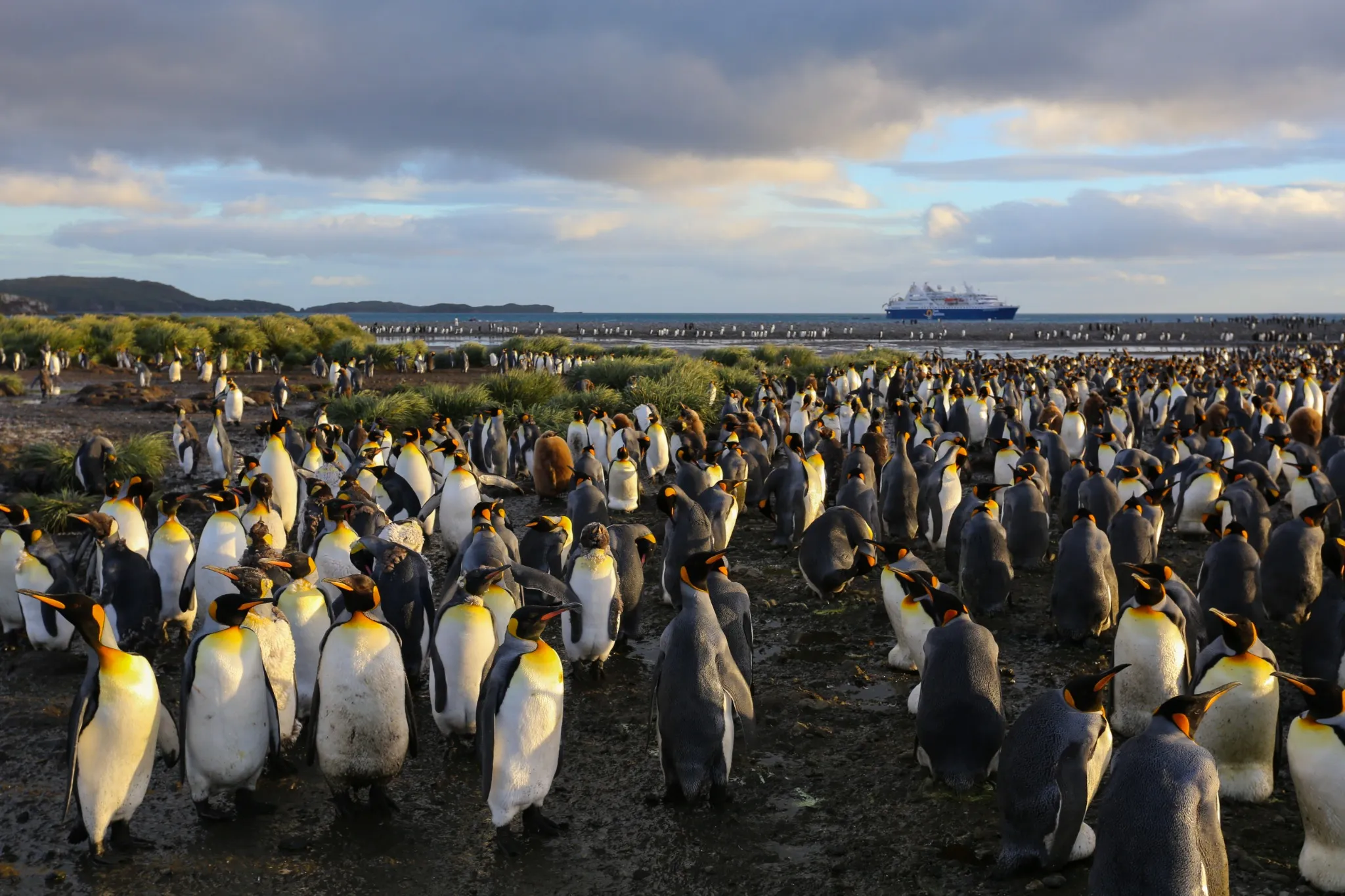
South Georgia is a living, breathing BBC documentary. You can stand on a beach like St Andrews Bay with something like a quarter of a million king penguins around you, along with elephant seals and fur seals. It’s a birder’s dream too, with nesting albatross including sooty and grey-headed. The island rises straight out of the Southern Ocean in a wall of jagged, snow-capped peaks, glaciers and wild geology. And then there’s the history: Shackleton, the old whaling stations, and a lot of British Antarctic heritage.
One of my favourite places on Earth is Gold Harbour. A glacier runs right down to the water’s edge, and in the glacial bay below it, king penguins and their chicks swim, wash and preen themselves before the day starts.
The Falklands get overlooked, which is a shame. You usually spend a day in Stanley, the capital, which is great fun: pubs, museums, a bit of history, and a wildlife walk at Gypsy Cove. The next day you’ll typically visit landing sites on the western side of the archipelago, where you can walk through tussock grass to within a few metres of black-browed albatross as they soar in and land on their nests. You’ll often see Commerson’s dolphins, plus king, gentoo and rockhopper penguins.
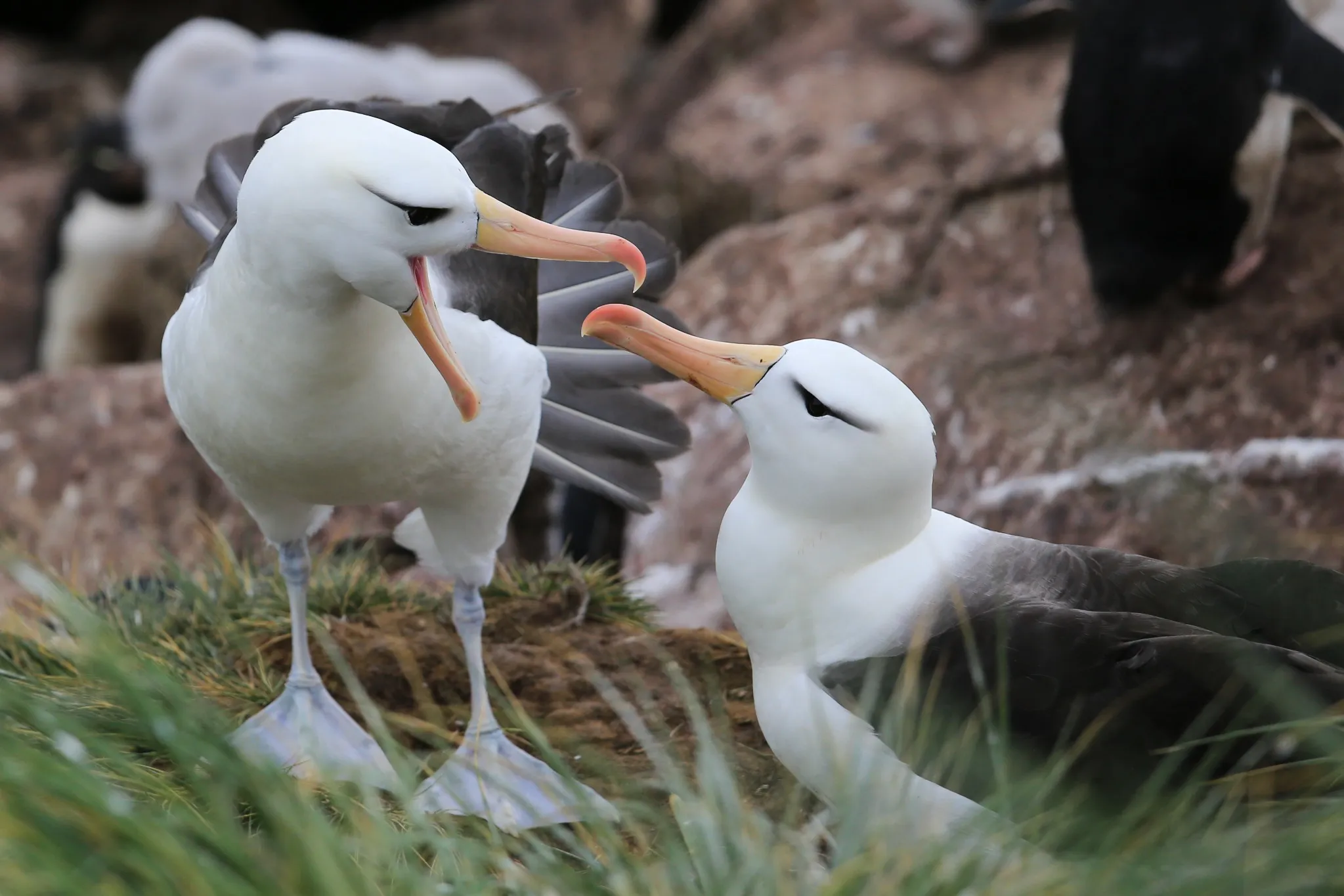
The honest trade-off is that it’s a lot of time at sea. Out of about 21 days, you’ll get maybe 10 days of excursions, and it’s almost double the price of the Classic Peninsula. It isn’t the cheapest way to see wildlife.
But if you have the time and the money, it’s the crown jewel. I’d especially point it to keen wildlife photographers, biologists and serious birders, people fascinated by Shackleton and polar history, and travellers (often recently retired) who want one big expedition that has it all.
A hot take: why I don’t recommend flying the Drake
Some trips skip the Drake Passage. You fly from Punta Arenas in Chile to King George Island in the South Shetlands, land near Chile’s Frei Station, take a Zodiac to the ship, and start exploring the next day. They’re often called fly-cruise or “fly the Drake” trips.
I know this is a bit controversial, but I don’t recommend them, for two reasons.
First, the weather. The airstrip on King George Island is regularly hit by fog, and the flight windows are narrow. I’ve personally been through one-day, two-day and three-day delays. I’ve done 2am flights and 4am flights. I’ve seen voyages cancelled outright. Delays can happen at either end, so you might start late, finish early, or both. The worst thing I’ve seen is people stuck in a hotel in Punta Arenas for two or three days, so stressed that when they finally arrive in Antarctica they’re mostly just relieved. Then they spend their last three days racing to see it all before flying home.
Second, you miss the build-up. The Drake crossing is how you arrive in Antarctica properly. You go to the lectures, learn the history and the biology, meet the people you’ll share the trip with, and spend two days in anticipation. Then the fog clears at the Convergence and you get that moment I described at the start. When you fly, you’re dropped straight into it. I think it takes a lot away from the experience.
Choosing the ship: why size matters more than anything
This is the section I care about most. As you’ll probably work out, I’m pretty passionate about it.
The 100-people rule
Under the guidelines set by IAATO (the International Association of Antarctica Tour Operators), no more than 100 passengers can be ashore at a landing site at any one time. This one rule shapes almost everything about your experience.
Ships carrying more than 200 passengers fall into a more restricted category and are much more limited in where and how often they can land. In practice that often means one landing a day. Ships with more than 500 can’t land passengers at all. At Expeditioner, we don’t recommend anything over 200.
But even under 200, there’s a big difference between, say, 190 passengers and 120. The sweet spot is 100 to 130 passengers. Here’s why.
The same morning on two different ships
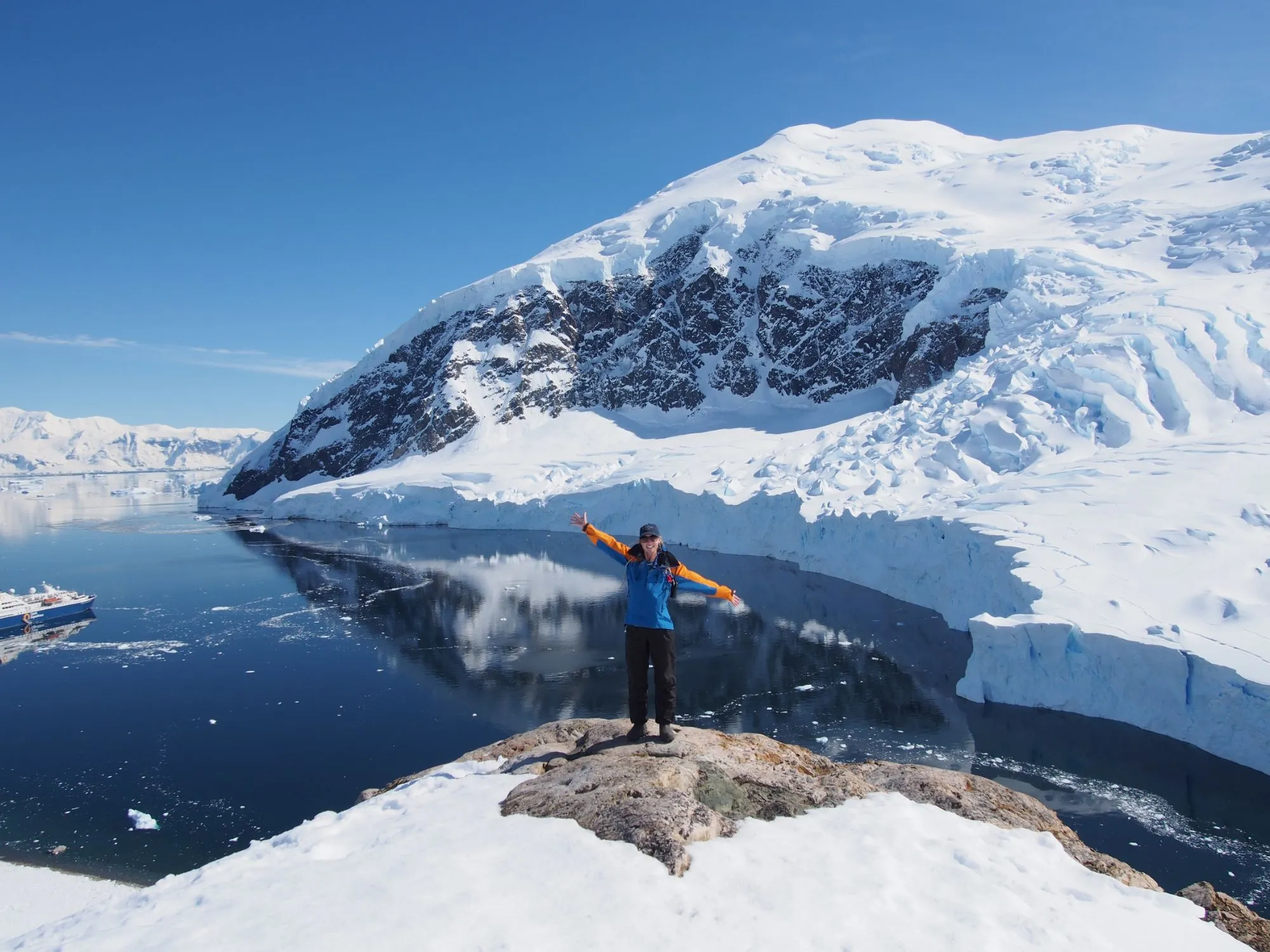
Let me show you what I mean using one of my favourite landings: Danco Island, in the Errera Channel just off the Gerlache Strait. Danco has a gentoo penguin colony and a walk up to the top of the island, where you get a 360-degree view over the channel and the Antarctic mainland. It’s one of those spots that makes you pinch yourself to see if you’re still dreaming.
On a 130-passenger ship, here is how it can work: about 30 people go sea kayaking in a sheltered bay, and the other 100 go straight ashore together. We land at around 8.30 or 9am. The walk to the top takes about an hour going up and half an hour coming down, and most people spend 45 minutes to an hour with the penguins. The last Zodiac back to the ship leaves around 12 or 12.30, just in time for lunch.
That’s close to three hours on land, with no rush. Nobody has to turn around halfway up the hill. You can watch the skuas cruise over the colony and see how the penguins react. You can stand at the top and watch icebergs roll in the channel below, or sit in the snow and smell the colony (it’s very much a smell).
On a ship with 200 passengers: the kayakers still go out, but now there are too many people to land everyone at once. So the ship runs what’s called a split landing. Roughly half go ashore while the other half go on a Zodiac cruise, and after an hour to an hour and a half, you swap.
That sounds like a two-for-one deal, and it’s how it’s sold. In reality, it halves your time on land and halves your time on the water. At Danco, an hour or so ashore usually isn’t enough to reach the summit. You see the penguins, and then you’re being called back to the landing site to switch to your Zodiac cruise.
Why I changed my mind about split landings
I’ll admit something. Earlier in my career, I thought split landings were great. A bit of land, a bit of Zodiac, everywhere you go. I thought it was a clever system.
I’ve completely changed my mind. Every time I’ve worked on a 200-passenger ship, I’ve wished I was on the smaller one. What you actually get is a rushed landing and a rushed cruise. You’re always half thinking about the next thing.
Whereas on a smaller ship, you get to just be there. Maybe you wander through the colony and then up to the viewpoint. Maybe you sit down and watch snowflakes melt on your sleeve. Maybe you watch one penguin for half an hour just to see what it does next. That kind of time is rare these days, and it’s the real luxury of Antarctica.
On a smaller ship, the operator will usually still run a Zodiac cruise if you want one, so you’re not missing out. You just aren’t forced to cut your time ashore in half.
Small ships can say yes
Smaller, expedition-focused ships can also change plans on the spot. Picture this: it’s a calm evening, the light is perfect, and you’re about to sit down for dinner when humpbacks start feeding behind the ship. A good, destination-focused operator will drop the Zodiacs and push dinner back. On many luxury ships, dinner service runs to a strict timetable, and that’s just not possible.
Older ships, experienced captains
Here’s another thing I’ve changed my mind about: I’ve come to prefer older, smaller expedition ships to the shiny new ones.
The new ships are comfortable and efficient, no question. But the older vessels that have been going to Antarctica for decades are tried and tested. Their crews know them inside out. Their captains have often been on the same ship for years, by choice. I always ask captains which ship they’d most like to work on, and nine times out of ten the answer is “the one I’m on right now.” After enough seasons, driving the ship becomes an extension of their arm.
There’s also a practical reason, and it’s about navigation. Many Antarctic waters are still poorly charted, so ships rely heavily on their own navigation history, the tracks they’ve safely sailed before. A ship that has been visiting for decades has a huge library of those tracks.
My first ever Antarctic ship was the Ocean Nova, and it’s a favourite across the industry. It has been sailing in Antarctica for more than 30 years, and its captain has been with it for about 15. Over those decades, it has been into practically every bay and nook on the Peninsula.
One season we were heading south toward the Antarctic Circle at the same time as a larger, newer, fancier ship on a very similar itinerary. There are two ways to get there. You can go wide, out into the open ocean around Adelaide Island. Or you can go through the Gullet, a narrow passage full of islands, reefs, rocks and shallows. It’s a bit like Alaska’s Inside Passage, and it needs a very capable ship and a very knowledgeable captain.
The other ship went wide. We went through the Gullet.
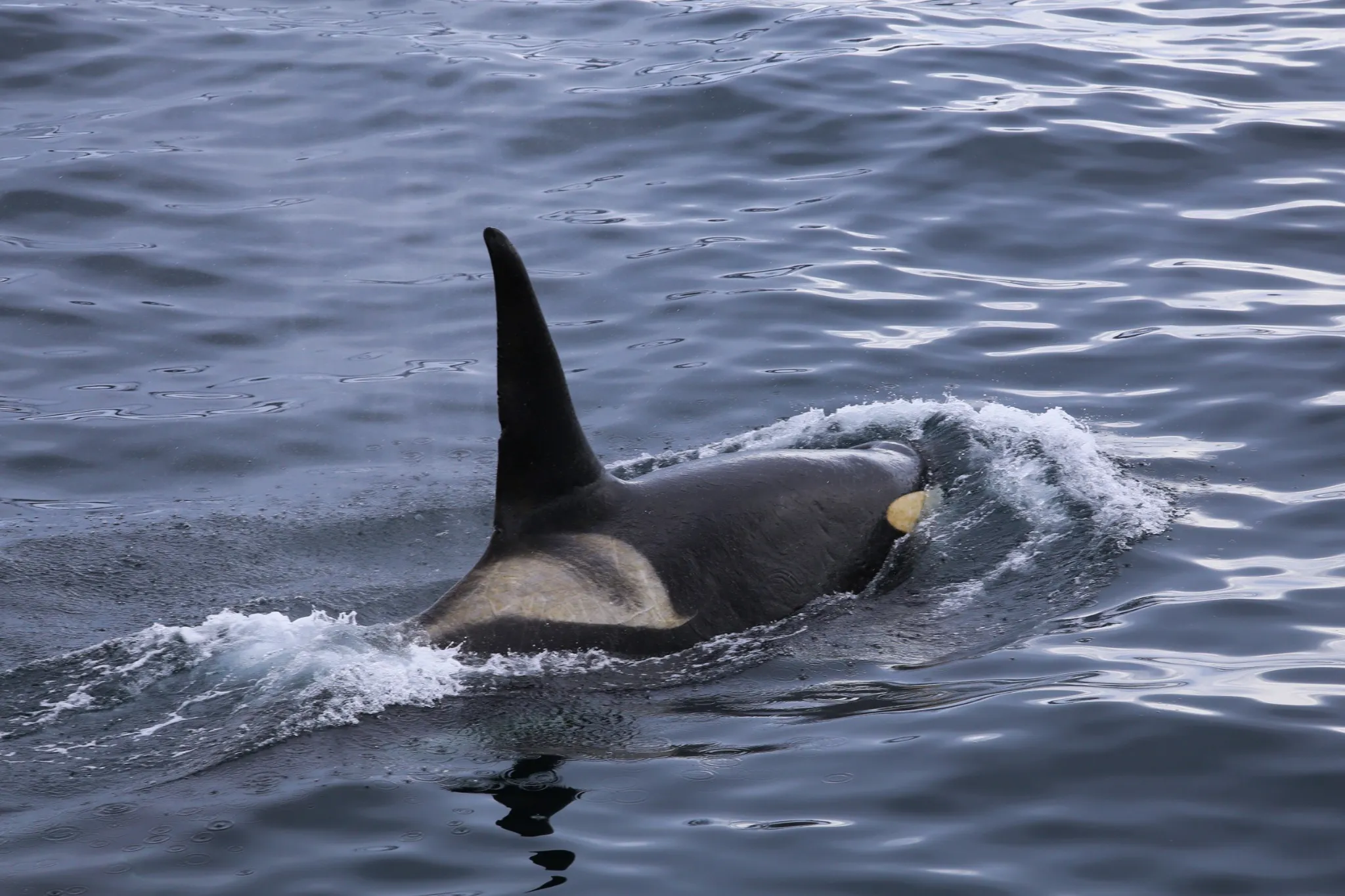
There wasn’t a breath of wind. The water was like glass. And we spent time with a family of resident orcas who are known for spy-hopping (lifting their heads straight up out of the water to look around) and working together to make waves that wash seals off ice floes. We watched them do it as we sailed south. Meanwhile, the other ship spent the night out in the swell, had a rough crossing, popped below the circle, and went back the same way.
To be fair, bigger ships can reach plenty of hard-to-get-to places too. It isn’t purely about size. It’s about the captain, the ship and its history, and smaller older ships with long Antarctic records tend to tick all three boxes.
What do bigger or luxury ships do better?
In fairness, they do some things better. The onboard service is more polished, as you’d expect: butlers, room service, finer dining and all the trimmings. Some carry helicopters for sightseeing or submarines for exploring underwater. If you have a lot of disposable income and you’re excited to see Antarctica from the sky and below the surface, a luxury ship can be a good fit.
What about seasickness? People often assume bigger ships handle the Drake better. The truth is that only the giant cruise ships with thousands of passengers are noticeably steadier, and they’re a different world entirely. Modern expedition ships have stabilisers and are purpose-built for the Southern Ocean. The Drake can still be rough, whatever ship you’re on.
Choosing the operator
There are a lot of operators in Antarctica, and nearly all of them do a reasonable job. The differences that matter, though, aren’t in the brochure.
Pick a polar specialist
Some operators do polar regions and nothing else. Quark Expeditions, for example, focuses only on the Arctic and Antarctic, and its expedition teams are polar experts through and through. Others are big-name ocean cruise lines, or even river cruise companies, that run voyages all over the world and add Antarctica to the list.
The difference shows. On a generalist ship you might get a guide who has done 100 trips in the Galápagos and none in Antarctica. Polar specialists live and breathe the polar regions, they hold themselves to a higher standard there, and they’ve spent years training and mentoring their own expedition leaders.
I’ll stand by this one: given the choice between a polar specialist and a big cruise brand, I’d choose the specialist every time. The brand name itself doesn’t matter much, but the operator’s polar experience matters a lot.
The team that’s worked together
The best operators have teams that have been working together for years. It’s a bit magic when you see it. Landings and Zodiac operations are more efficient, there’s no queue at the gangway, and that means more time outside.
My favourite way to tell if a team works well together? Listen to the radio.
On a new team, the radio is constantly chattering. People are asking questions, checking in with each other and over-communicating. On a well-oiled team, the radio is nearly silent. Everyone knows where they need to be, and the expedition leader hardly needs to call anyone. It’s peaceful.
This matters even more when things go wrong. I’ve seen a medical evacuation from a landing site handled so smoothly you’d barely know it happened: one person on first aid, one fetching the medic, two on the stretcher, one managing the crowd, and the radio kept clear for the leader’s instructions. I’ve also seen the opposite, where nobody quite knows who’s running for the first-aid kit. That’s why I always look for operators who keep their staff for years.
There has been a big influx of new, less experienced guides as the industry has grown, and staffing ships is hard. So the question of how long a team has been together tells you a lot.
What makes a great expedition leader
The best expedition leaders aren’t the ones running the show. They step back and let the team shine.
Everyone on an expedition team is an expert in something: geology, glaciology, history, birds, penguins (yes, “penguinologist” is a real job and yes, it’s the best job title). When the leader makes it all about themselves, the team just follows orders and the trip ends up fine but forgettable. When the leader trusts the team and gives them room, you get citizen science on the back deck, a quirky quiz night, or a guide who knows a secret spot just around the corner and takes a Zodiac there. People’s passion comes through, and guests feel it.
Great leaders also read the weather and the environment really well. Here’s my favourite example.
In the 2015–16 season I was working for Quark on the Sea Adventurer. We were anchored off Danco Island in the Errera Channel, and that afternoon we were due at Cuverville Island, which has a big gentoo colony. But Cuverville is open to the northwest, and our expedition leader noticed the wind was going to push ice right onto the landing site.
Most teams would have sailed the two hours to Cuverville, looked at the ice and realised they couldn’t land, then spent the afternoon on the ship. Instead, our leader changed the plan with about five minutes’ notice and sent us to Neko Harbour, roughly two hours south in Andvord Bay.
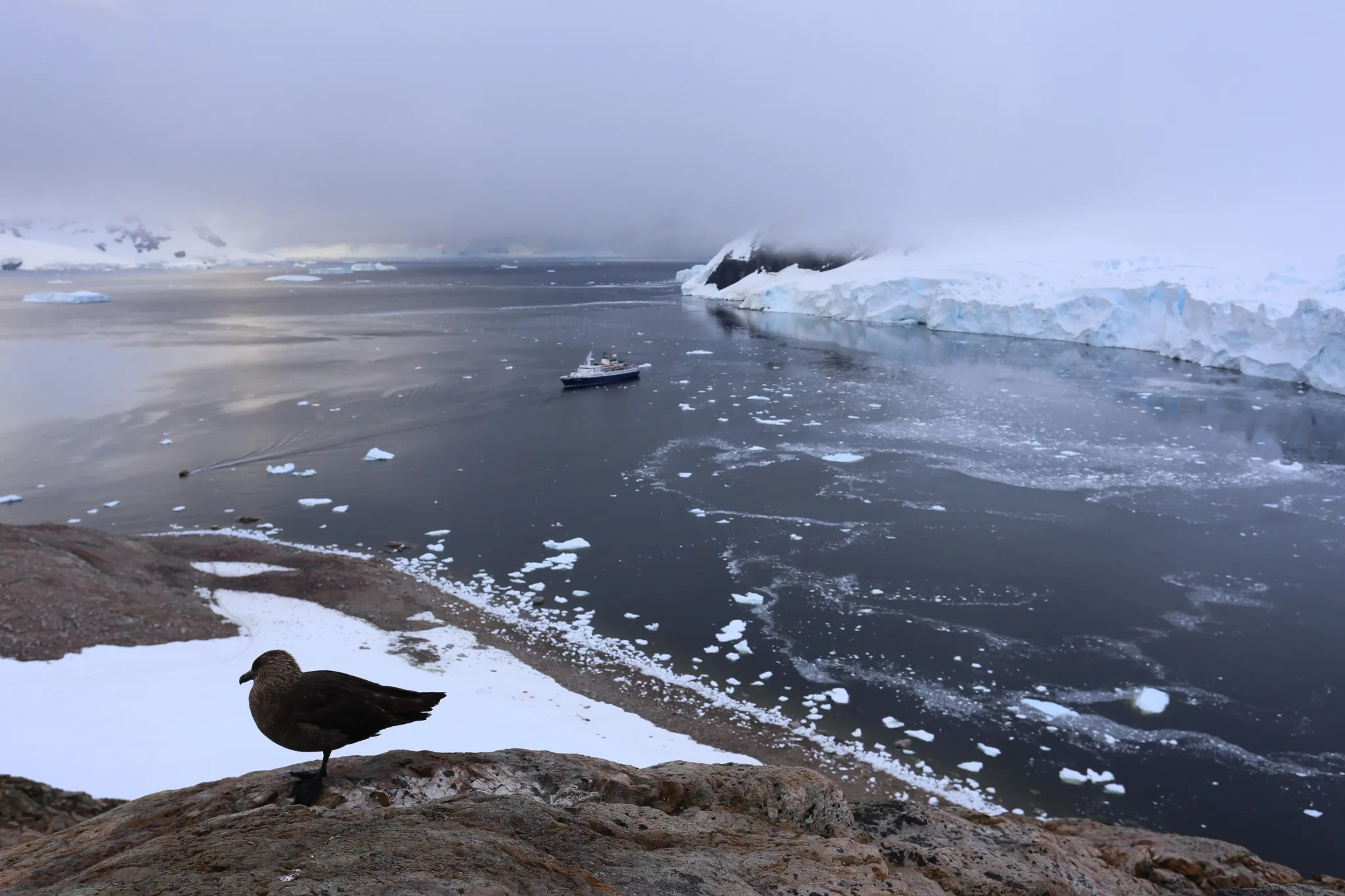
Neko is one of my favourite landing sites. It’s a continental landing, so you’re standing on the Antarctic mainland itself. You walk up past a gentoo colony to a high point overlooking the bay and a very active glacier. When the glacier calves, there’s a huge crack, a chunk of ice crashes into the water, and a wave rolls across the bay and breaks on the beach where the Zodiacs wait.
We stood up there for sunset. An afternoon that would have been a bust became the highlight of the trip, the kind of moment where you look at the person next to you to check it’s real.
That happens when a team understands weather and wind, uses modern forecasts, and is trusted by head office to make big calls on the spot.
The questions to ask any operator
If you’re looking at an operator you don’t know, here’s what I’d ask:
- How many passengers does the ship carry?
- What does a typical day look like? Do you do split landings, or can everyone go ashore at once? How many hours ashore do you aim for each landing?
- How long has the expedition team been working together?
- Would you postpone dinner for a wildlife opportunity? Or is dinner service fixed?
- Do you support citizen science? Operators that back science programmes tend to run richer onboard programmes too.
Their answers will tell you a lot about their philosophy.
The warning signs
- More than 130 passengers
- Split landings as standard
- A relatively new expedition team
- Newer ships that have been working in Antarctica for less than about 3 years, so they have less navigation history
- An operator that isn’t a polar specialist, such as a river cruise company or a big ocean cruise line
- Not enough Zodiacs for everyone on board
What matters less than you think
Your cabin
People spend far too long comparing cabins. You barely spend time in them. You’ll be outside, in the lecture room, in the dining room, in the observation lounge or on deck. As long as you have a comfortable bed, somewhere to put your bag and your own bathroom, you’re sorted.
Pay more attention to the ship’s outdoor deck space. You want plenty of room to walk out and take in the view as you cruise.
A balcony? Not needed. I’d book the cheapest twin cabin with a proper window (not a porthole) and a comfortable bed, and spend the savings on more time in Antarctica.
The food
Some people worry about this, but you’ll eat very well on any expedition ship. Breakfast and lunch are usually big buffets with à la carte options. Dinner is usually four or five courses, with a choice of four or five mains that change each day, plus staples like steak and baked salmon. The luxury ships do fancier dining, but everyone comes home well fed.
Optional activities: worth it or not?
Zodiac cruises and landings are included in your fare, and they’ll keep you plenty busy. On top of that you can add things like sea kayaking, camping, snowshoeing, snorkelling, scuba diving and even ski, snowboard and mountaineering programmes on some ships. Here’s my take on the common ones.
Camping: yes, if you can. One night we were camping on an island. It wasn’t dark, by the way, it was bright as. I woke up in the middle of the night, peered out of my bivvy bag and saw everyone else asleep. Then a humpback mother and calf swam right past the shore. It was so quiet I could hear them breathe in and out. You hear everything down there at night: the ice creaking, a glacier calving, penguins squawking, seals splashing and whales breathing. It’s pretty magic.
Kayaking: do a one-off paddle, not the full programme. Kayaking in Antarctica is incredible. All you hear is your paddle and the wind. But the full programme means kayaking every excursion, and you lose a lot of time on land. A single-day paddle gives you the experience without the trade-off.
Photography programmes: only if you’re serious. Many ships have an onboard photographer who’s happy to give tips, and that’s enough for most people. If photography is your main reason for going, a dedicated programme might be worth it.
Snorkelling and submarines: skip them. You rarely see much wildlife when snorkelling. It’s mostly putting on a dry suit and jumping in. Submarine trips can be similar. That’s my hot take.
Spending your money wisely
Here’s how I’d prioritise your budget, in order:
- The ship. Does it carry 130 passengers or fewer? If yes, keep going.
- The itinerary. Can you afford a longer trip (about 13 nights) or South Georgia?
- The cabin. This is where you save. Get the cheapest twin with a proper window.
- Activities. Nice to have, not essential.
- Extra travel in South America. Lovely, but optional.
Let’s put some rough numbers to it, per person in US dollars. These are budget scenarios, not fare quotes: prices and inclusions vary by departure.
With around $12,000: A ship with 130 passengers or fewer may be a stretch, especially if you’re including flights and insurance. Then look for the most days in Antarctica you can get, take the cheapest cabin and skip the extras.
With around $20,000: You have a solid budget for a good operator. Choose a ship of 100 to 130 passengers, aim for a longer Circle trip, and take the cheapest twin cabin with a window. A few days in Buenos Aires is worth it.
One thing I’ll gently say about Patagonia: if you do it after Antarctica, it can feel a little underwhelming. After everything you’ve just seen, very little stacks up. At this budget I’d keep the focus on Antarctica and come back for Patagonia another time.
With around $30,000: Start with the ship, then ask: can I afford South Georgia? If yes, do it. If not, book a Circle trip and spend the rest exploring South America.
If it were my money
If I were booking for myself, it wouldn’t take long. I’d do the Crossing the Circle itinerary in February, on a ship with 130 passengers or fewer, with a polar specialist like Quark, Polar Latitudes or Lindblad.
For the best value overall, choose late season, when prices often drop. Then put the savings toward a longer itinerary.
Who you’ll meet on board
Every voyage brings together a great mix of people. Broadly you’ll find:
- The photographers, chasing the light and the wildlife
- The adventurers, often couples, keen on every activity going
- The learners, fascinated by the science and history (my people!)
- The bucket-listers, ticking off their seventh continent
There are often plenty of solo travellers too. They tend to find each other fast. Everyone comes for a different reason, but they’re all there for the same experience, and plenty of people go on to travel the world with friends they met on board.
Before you go
Give yourself a buffer
One of the biggest mistakes I see is people flying straight into Ushuaia and boarding the ship the same day: jet-lagged, exhausted and running on airport coffee. It’s a big, expensive trip. Give yourself a couple of days in Buenos Aires or Ushuaia to recover and settle in, so you arrive rested and ready to go.
Bring two pairs of polarised sunglasses
It’s incredibly bright in Antarctica, even when it’s overcast. Polarised lenses cut through the glare on the water, so you can see penguins swimming beneath the surface or the shape of a whale before it comes up. Bring a spare pair. Sunglasses break and get lost, and you’re a long way from a shop.
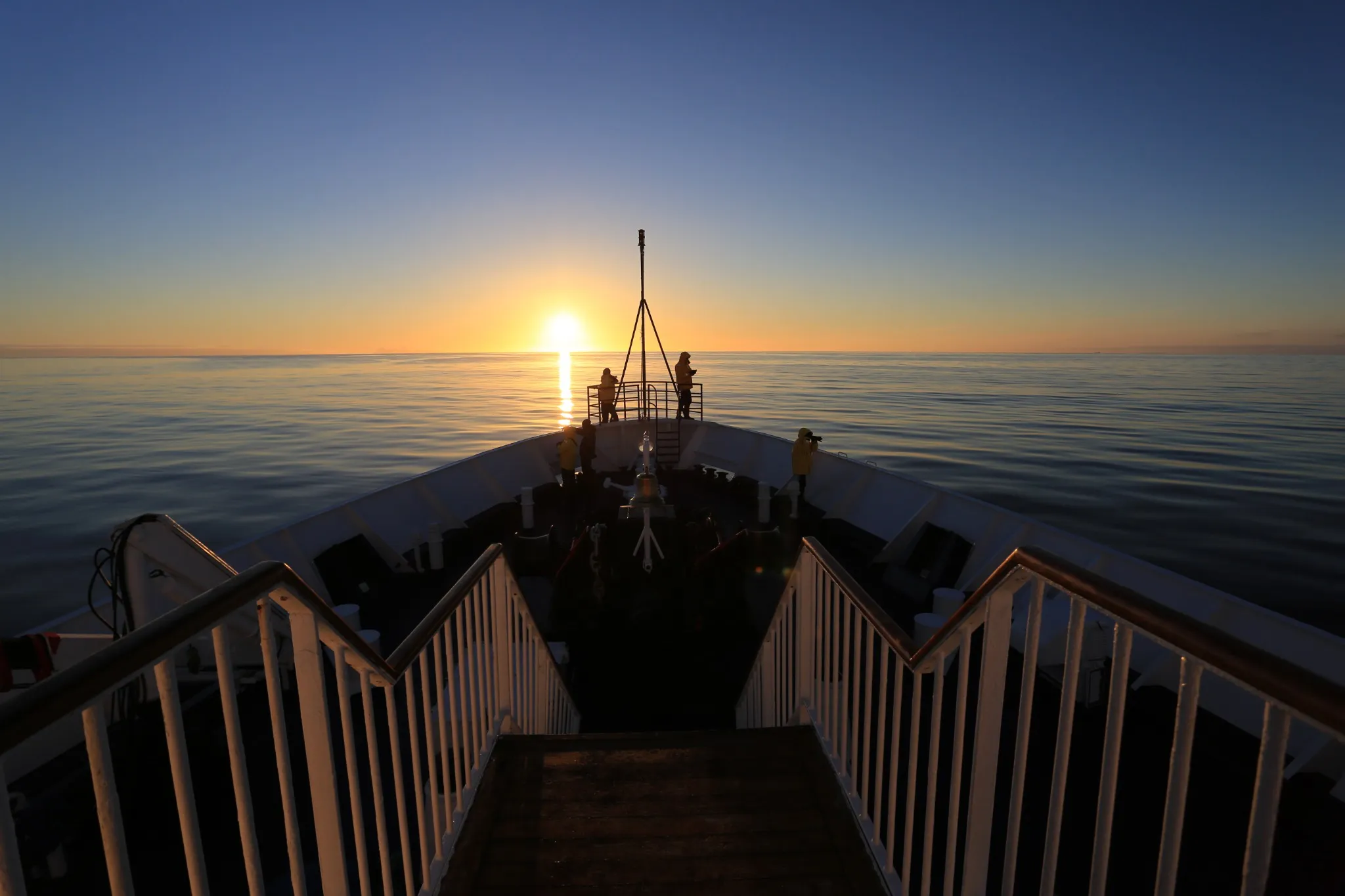
My one piece of advice: be out on deck
If I could give every first-time traveller just one piece of advice, it would be this. Let me say it twice so it sticks:
Be out on deck as much as humanly possible.
So much of Antarctica happens while you’re moving between places: a pod of orca, a humpback breaching, a seal on an ice floe. These moments are fleeting. The ship can’t always stop or make an announcement, because it may need to reach the next landing site. If you’re inside reading, eating or napping, you’ll miss them.
So get outside. Hang out on deck or visit the bridge, if it’s open, where the officers and expedition team often watch for wildlife. I’ve noticed over the years that the smokers see the most wildlife on every trip, simply because they’re always outside. Take a page from their book but leave the cigarettes behind.
Matching the right person to the right ship
There’s no single best Antarctic expedition. There’s the right one for you, depending on when you can go, what you want to see, how active you want to be and what you want to spend.
That’s what we do at Expeditioner. We aren’t trying to push everyone onto one partner’s ship. We want to understand why you’re going, then match you with the season, itinerary, ship and operator that will give you the most time out there.
And when your moment comes, when the fog clears and the mountains appear, I hope you’re standing on deck.