Journal · Feature · Antarctica
The Whale That Looked Back
Why Liz and I keep going back to Antarctica
A humpback whale once looked me in the eye from right beside our Zodiac, and I’ve been trying to find the words for it ever since.
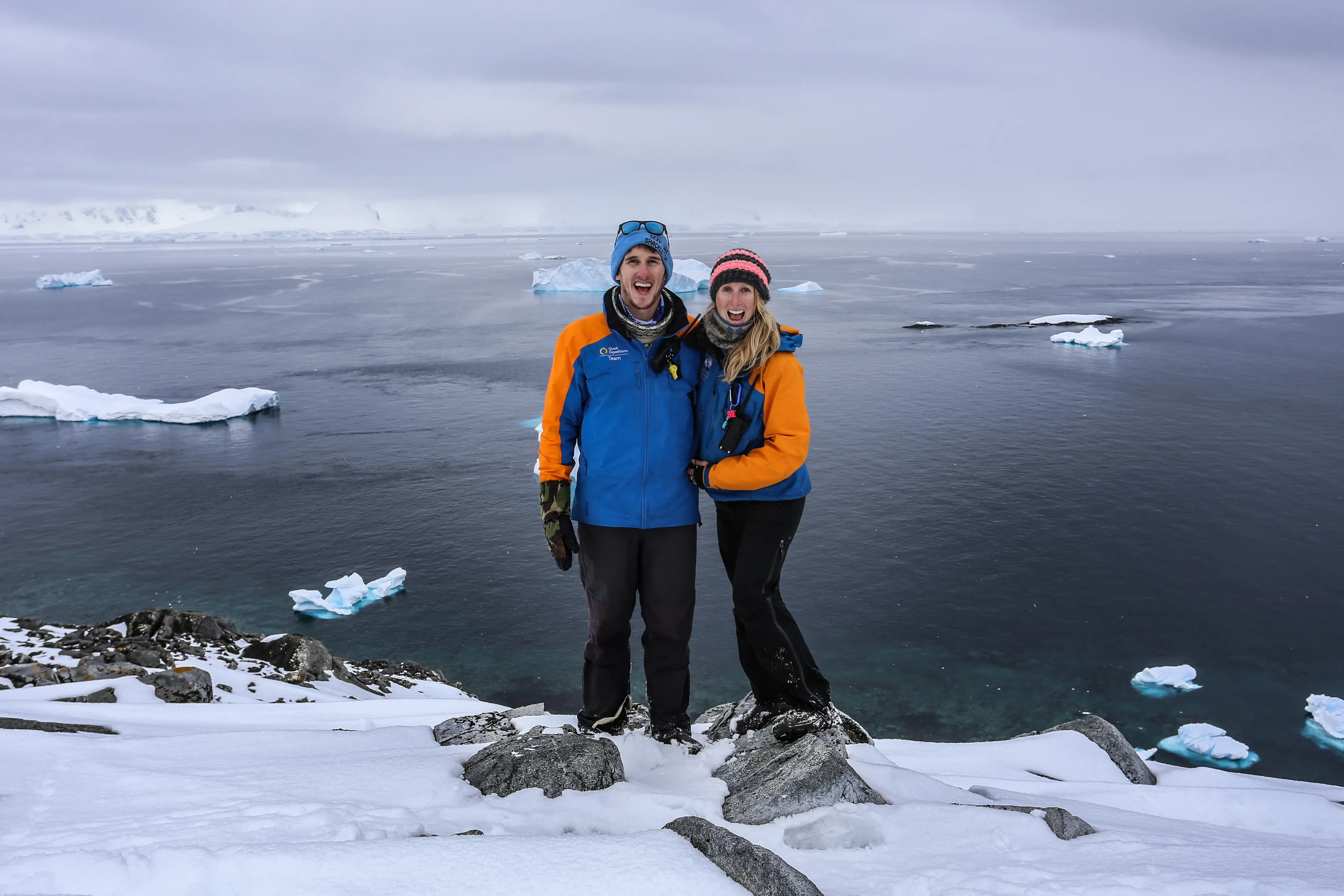
I haven’t managed it yet. What I can tell you is why that moment, and a few others like it, keep pulling Liz and me back to the polar regions. We started out as a marine biologist and a geologist guiding for Quark Expeditions, on all sorts of vessels across Antarctica and the Arctic, and after somewhere between fifty and sixty voyages we still haven’t had enough. Going to the polar regions is a rare privilege. You get to stand in a wilderness like that, and then you get to share it with people who feel the same way. That part is just as good.
So why do we keep going back? Whales, mostly. Then the people, and then the science. Grab a coffee, because this might take a minute.
We were late, and it helped
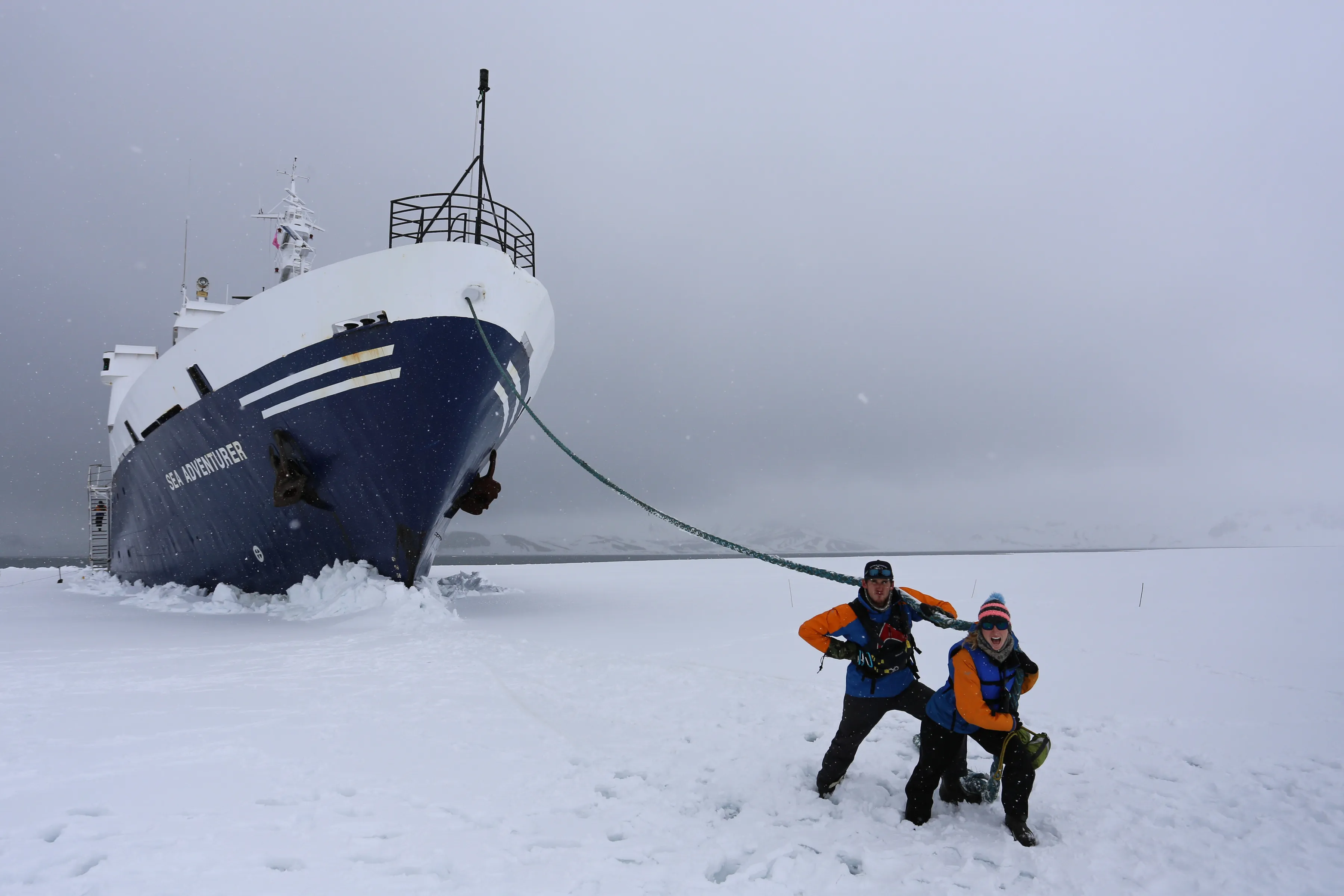
Let me take you back to 2014. My second season with Quark, aboard the Sea Adventurer, which is still one of my favourite ships I’ve ever worked on. We’re sailing into Wilhelmina Bay, on the Antarctic Peninsula, and there are humpbacks everywhere. Little groups of them out on the horizon. Some are really active, blowing and diving. Others are just logging, which is what whales do when they’re basically napping at the surface.
Liz and I were slow getting our passengers into the Zodiacs that morning, so by the time we launched, most of the other boats had already zipped off after the active whales. Normally you’d be a bit gutted about that. But Liz and I have always had the same philosophy: if we get a choice, we’ll go away from the crowd. Away from the other Zodiacs, away from the engines and the chatter, so we can have our own quiet little experience with the place.
So we buddied up and peeled off, just the two boats, towards a couple of humpbacks sleeping a few hundred metres away. I cut the engine. Ten guests in my Zodiac, all of us just drifting.
The weather was doing us favours. Overcast, but really clear, and not a breath of wind. The water was dead flat. We could hear the whales breathing from where we sat. Already a great morning, and I’d have gone home happy with it.
Then both whales slid under and the surface went empty.
It happens. I know exactly what to say when it does, so I started in on the speech. Whales wake up, they decide to feed or move on, that’s how it goes, folks. We might think about heading back to the ship.
And right then, the water next to the Zodiac rose.
A head came up, really slowly, right beside the pontoon, and as it came up it rotated. I saw its eye. It saw me. We locked eyes, me and a humpback whale, and I’m going to be upfront: I still struggle to put it into words. It was an instant connection. One of the most breathtaking moments of my life.
Then it sank back down, just as slowly, and stuck around.
For the next thirty minutes that whale was endlessly curious. It drifted past us. It went under the boat. It rubbed its dorsal fin down the side of the pontoon, rolled over, slapped a pectoral fin on the water, then crossed from my Zodiac to Liz’s and came back again. We call it mugging, which is a funny word for something so gentle. The whale comes to you and checks you out. This one was very clearly trying to work out who we were and what on earth we were doing in its bay.
When it finally drifted off, the whole boat was buzzing. Everyone talking over everyone. Back on the ship we headed straight to the bar for a couple of drinks, because what else do you do? You’ve just had a one-on-one with a humpback whale, and you need to celebrate the privilege somehow.
I don’t think I’ll ever have that again, and that’s part of the point. Encounters like that only happen somewhere like Antarctica, where tourism is few and far between, the place is so well protected, and the whole industry is managed so responsibly.
It’s the big animals that keep pulling us back
Here’s a confession. After fifty-odd expeditions, you get a little comfortable around penguins. (I love them. Please don’t tell the penguins.) What keeps drawing us back is the charismatic megafauna, which is a fancy way of saying the big stuff. For us that’s the humpbacks, and then the orca.
My first ever season, I was a rookie guide, still learning to drive a Zodiac. One of the other guys on the ship was teaching me, so we were out running drills, back and forth, back and forth. And I was desperate to see a killer whale. Everyone had told me you have to be lucky. They call orca the ghosts of Antarctica, because they’re always around but they’re really hard to see.
I was mid-drill when I heard it. A big, heavy exhale, right behind me.
I spun around, and a huge male orca was gliding past with the most enormous dorsal fin. Behind him, a whole pod. A family of ten more. They came straight past our Zodiac, then started circling us, a few of them spy-hopping to check us out, and then they just slipped away towards the horizon.
Two or three minutes, tops. Gone. I’m pretty sure I forgot how to drive a Zodiac for a bit, but I’ll never forget it.
The day we pulled a yacht off the rocks
Not every unforgettable moment down there involves an animal. One of mine involves a boat stuck on a rock.
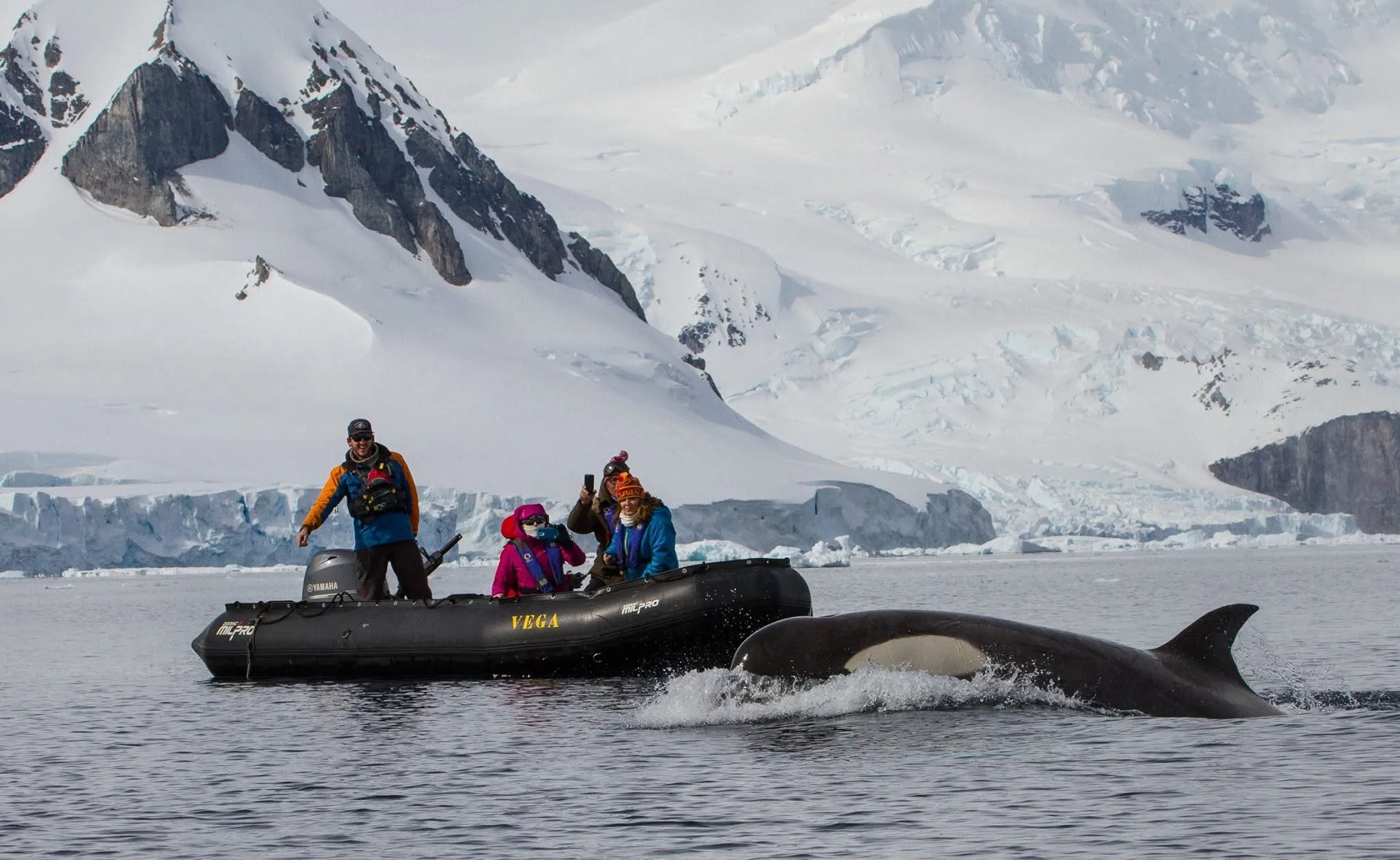
Several small yachts cross the Drake Passage to explore the Peninsula, and one day a distress call came through on our radio. A yacht had run aground on the back side of Cuverville Island. Its keel had wedged between rocks, and even at high tide it couldn’t wiggle free.
Out there, everybody helps everybody. So we launched the Zodiacs, went out to the yacht first, and brought the people on board back to our ship. Then we headed out again to see if we could save the boat.
The plan went something like this. One rope tied to the bow. A second rope tied to the mast. While we dragged the bow, we pushed the mast over sideways, so the whole boat tilted and the keel lifted up and out across the rock. Simple on paper. In practice, we worked at it, waited for the next high tide, and worked at it some more.
Five or six hours later, it slid free. No permanent damage, and the yacht was good to carry on with its expedition. An extraordinary day.
Finding our people
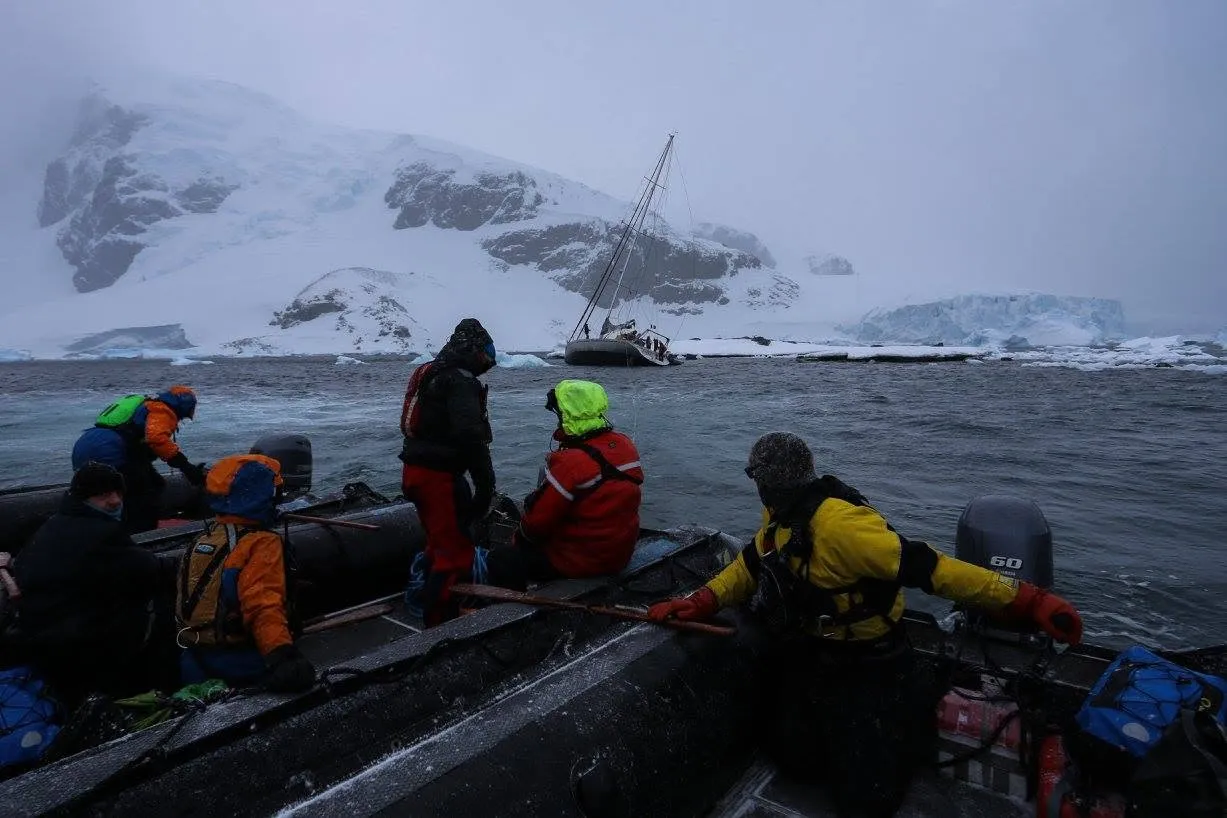
The other thing that keeps pulling Liz and me south is the people. Every voyage, you end up with passengers from all over the world, all of them well travelled, and all of them there for a different reason. Some come for the wildlife, some for the history, some for the birds. But underneath it, I reckon everyone has this quiet, almost subconscious urge to share the experience with a community of people who get it.
Put a hundred of those people on a ship, all there for one reason, to see Antarctica in all its glory, and something happens. A community forms. It’s a sense of identity, of belonging. Time and time again it felt like we were travelling with our people. Our village.
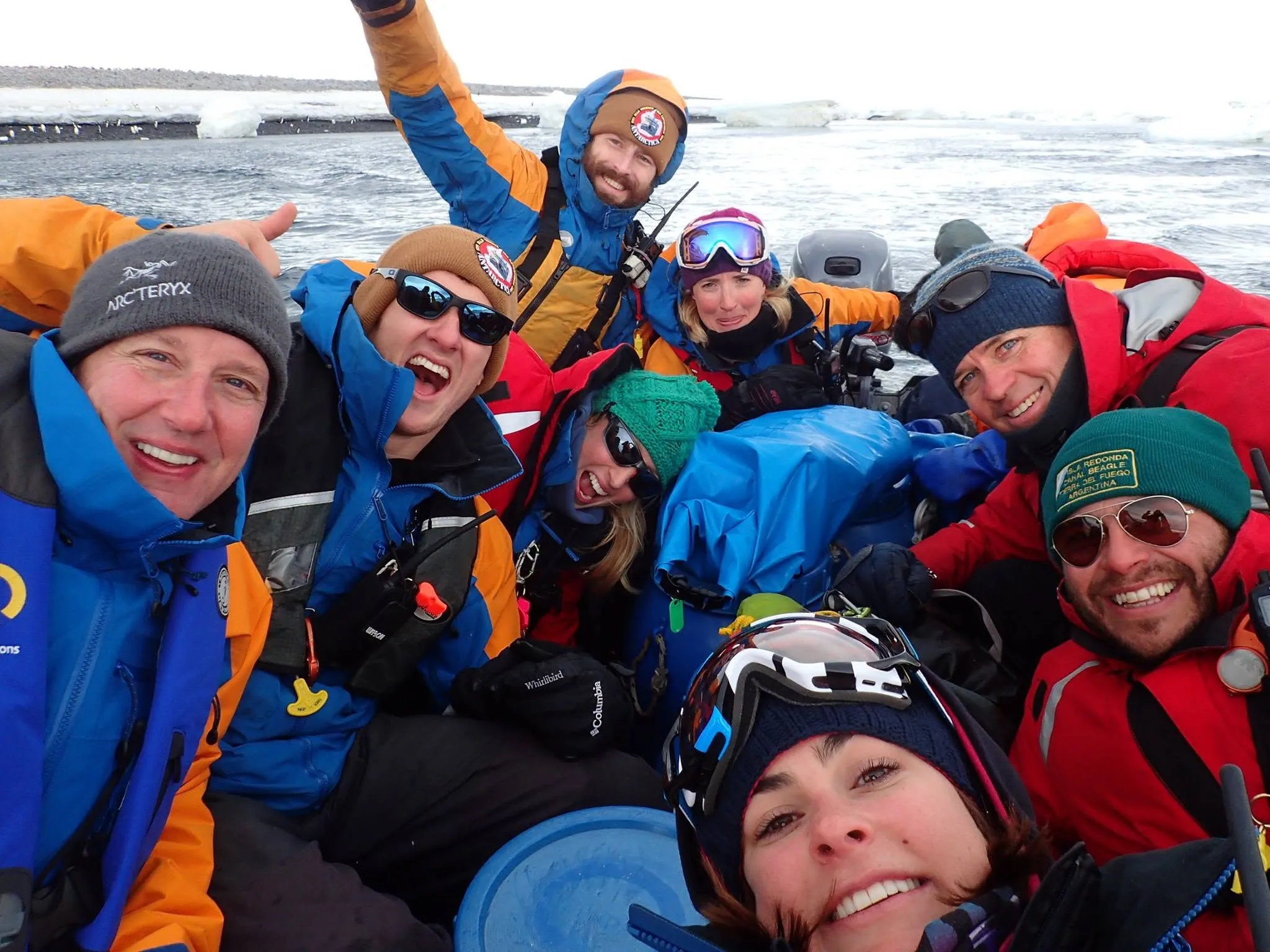
And then there’s the expedition team, which is something else again. You work with the best, most knowledgeable experts in their fields. On any given voyage, we’d have a geologist, a marine biologist, an ornithologist, a historian, and the expedition leader, the big boss who decides where we go, what we do, and everything in between.
But it’s not really a team. It’s a family. When you’re on a ship for two or three months at a stretch, you rely on each other for everything. We’re all drawn to this industry for the same reasons: a shared passion for exploring wilderness and protecting these very special places. We’re all a little quirky. We’re all a bit weird. That’s exactly what makes it work. Where one person needs help, another is already there, and we’re always boosting each other and striving to be better.
We’ve been through medical evacuations together, and some seriously wild weather. And when you’re away from home that long and bad news arrives from back there, your ship family is the one that props you up. Some of our longest-standing friendships were made on ships. To this day we have hundreds of friends around the world we can ring up, and it feels like we’ve stepped straight back onto the ship. We’ve also laughed so hard together that we’ve cried, more than once. Lots of those friends turn up at our place in Sydney when they’re passing through, which we love.
Our passion for science
Fair warning: this is the bit where I get a bit excited. I love citizen science. On many voyages, we’ve taken part in citizen-science projects that give the experience another purpose beyond simply visiting.
Happywhale. When we photograph a humpback’s tail, we can upload it to the Happywhale database. They match it against known records, so each time that individual whale is sighted in Antarctica, it’s logged, geolocated and tracked. If it turns up further north somewhere else in the world, you can follow its migration. Over time, those sightings help researchers understand whale migration routes and can support efforts to protect them. I’m very, very passionate about this one.
Cloud Observer, with NASA. We go out on deck, look up at the sky and record the clouds, sometimes timing our observations to a NASA satellite passing overhead. The satellite sees them from the top, we see them from the bottom, and NASA uses our observations to check its satellite observations. Passengers love it. It gets people outside, thinking about the climate and the environment they’re travelling through, and there’s something special about knowing a satellite is passing over while you’re standing on deck, doing your bit.
FjordPhyto. We collected water samples from the fjords and sent them off to be assessed for phytoplankton, tracking diversity, health and how it all changes over time.
And Liz did microplastic sampling, collecting ocean water at set locations along the Antarctic Peninsula and submitting it to a university. Those samples were analysed, which helps us understand what microplastics are doing to the ecosystem down there.
A place that’s changing
It would be wrong to talk about Antarctica without saying this: it’s changing. When you go back year after year, you see it. More snowfall early in the season. Warmer days. A lot more sun, and a lot more melting events. We’ve watched glaciers recede, and we’ve seen how heavy snowfall affects the nesting and breeding success of penguin colonies up and down the Peninsula.
That’s exactly why I believe in supporting Antarctic tourism and science. Having people down on the Peninsula means someone has a finger on the pulse of what’s actually happening. The industry is growing, but the environment is under real threat. Our expeditions put us in a unique position to support meaningful research while inspiring a new generation of ambassadors who will advocate for the protection of this special place.
People sometimes ask whether I’ve ever had a disappointing or uncomfortable experience down there, something that made me see the place differently. Not really. Antarctic tourism is tightly regulated under the Antarctic Treaty System, with additional guidelines from industry bodies like IAATO, and the guides I’ve worked with take protecting the place seriously. We aim to leave no trace on shore, but getting there and travelling through it still has a marginal impact.
If I’m forced to name a hard bit, it’s this: sometimes you’re working with passengers who have a different set of values or beliefs, and they don’t quite see how magic the place is. Showing the brilliance of Antarctica to someone who isn’t feeling it yet is the toughest part of the job. But it’s also a big part of why we do it. Helping people through that journey, the learning and the experience, is the point.
Why I’ll keep going back
After fifty or sixty voyages, I still get excited about going somewhere new. I still love spending as much time on the water as I can, getting in among the different ecosystems and, if I’m lucky, watching orca and humpbacks in the wild.
But my relationship with Antarctica has changed. I started out as a guide. These days I look for more purpose, more direction, and I like going on special-interest voyages that have a mission behind them.
One of my favourites was a partnership with WWF, supporting their program to establish marine protected areas in Antarctica. We took a team of scientists south to study humpback whales with drones, to observe the whales from above and gather footage for the researchers. What blew my mind was how important the science is, and how beautiful the footage turned out to be. We even saw a pod of Arnoux’s beaked whales, which have only rarely been seen in Antarctica, and managed to get them on camera. Very rare. Very cool.
So, if you’re thinking about going, here’s what I’d tell you. Go for the wildlife, sure. But go for the people too, and if you can, go with a purpose. Join in the citizen science. Spend as much time on the water as you can. And when the moment comes to pick between the crowd and the quiet, take the quiet. That’s where the whales find you.
Give me a calm day, a Zodiac and a bit of distance from everyone else, and I’ll cut the engine and wait.