Journal · Feature · Antarctica
The Trip That Changed Everything
How Liz and I Found Antarctica
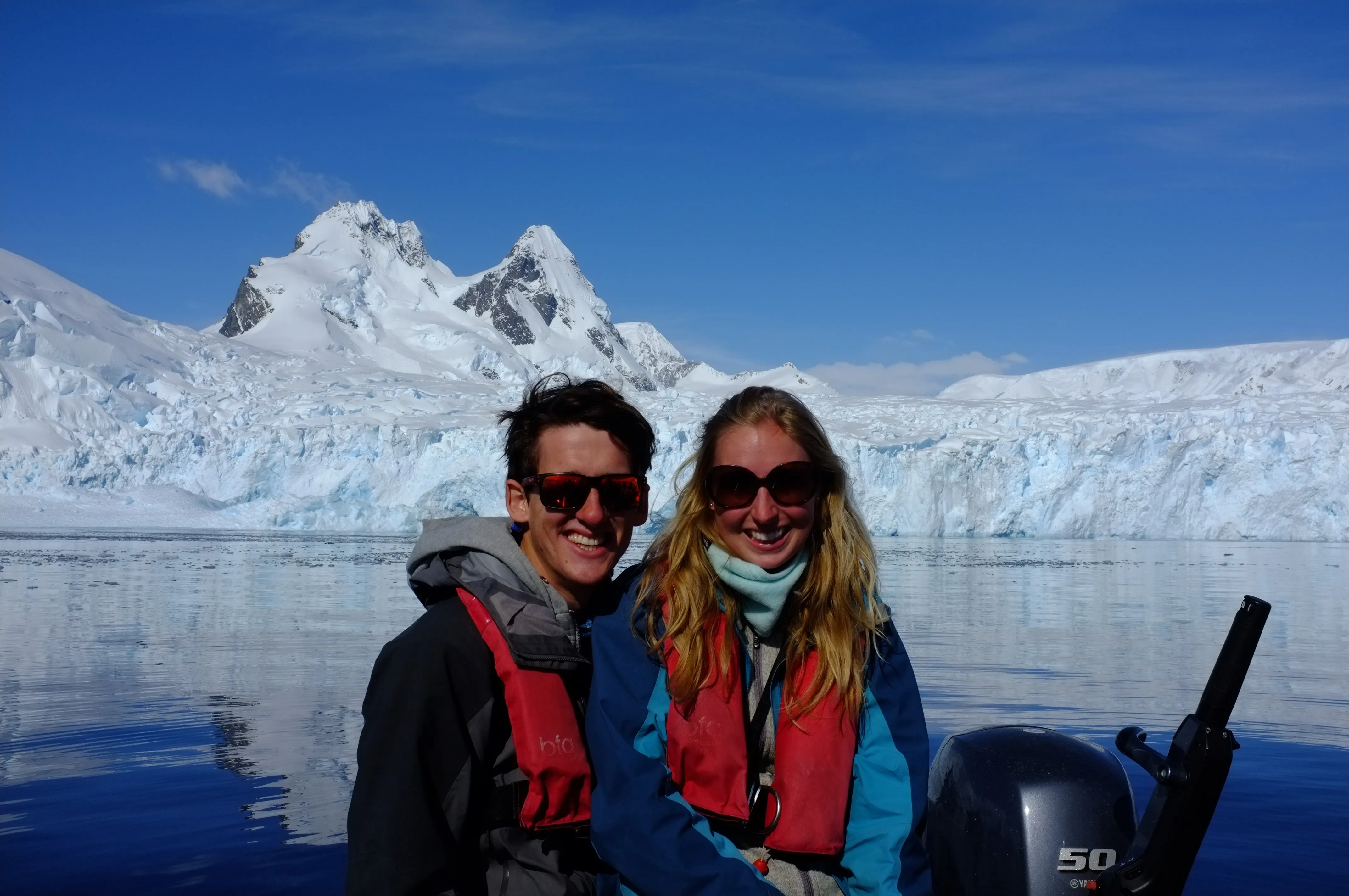
There’s a moment from my first morning on an expedition ship that I still think about. I was standing at the breakfast buffet, quietly collecting condiments.
Not using them. Collecting them. Tucking little packets away for later, exactly the way I had for the past year of backpacking, when every meal had to stretch and nothing went to waste. Then it landed. There was lunch coming. There was an à la carte dinner coming. I could stop now.
I stood there, a bit stunned, holding my stash, and started laughing at myself.
This was 2012, on a little ship called the Ocean Nova, and Liz and I had just bought a last-minute ticket to Antarctica. I was a geologist, and Liz, my girlfriend at the time and now my wife, was a marine biologist. Neither of us had any plan to work down there. We just wanted to see the seventh continent once.
Instead, that ticket became our whole life. Here’s how it happened, and yes, there’s a bottle of red wine involved.
Before the ice
Back in Australia, Liz and I were living pretty ordinary lives. I was a geologist in the mines out in Western Australia. Liz was bouncing between a handful of different businesses as a marine biologist. I figured I’d spend my career in remote mining country, and Liz figured she’d end up with a conservation nonprofit somewhere at home. Antarctica wasn’t on either of our radars.
Then we quit. Both jobs, same time, and we set off to see the world.
First stop was Nepal, where we walked the Annapurna Circuit, and that hike cracked something open in us. Being out in wilderness that big and that beautiful gets under your skin. From there it was Europe, then Argentina, then the long road up through the Americas to Hawaii. About a year and a half all up.
Somewhere in Argentina, while we were hitchhiking and backpacking our way south, a friend of ours called Marty told us something we didn’t know was possible. Marty and I had been at university together in Sydney. He told us that at the very bottom of the country sits a town called Ushuaia, the gateway to Antarctica, and if you had a bit of time up your sleeve and a little luck, you could wait there for a last-minute ticket.
A geologist and a marine biologist, with the seventh continent sitting at the end of the road. We were going. Obviously.
Two weeks in a tent, waiting on a ticket
We were on a very tight budget, so we did Ushuaia the only way we could: in a tent pitched out the back of a hostel, on the outer edge of town. I loved it. While we waited, we hiked in Tierra del Fuego National Park, then crossed to the Chilean side of the Beagle Channel to Isla Navarino and walked the Dientes circuit. It was spectacular. We had the trail to ourselves.
Every single day, we’d check in with the local agents. Anything come up? Anything at all?
Nothing. Then nothing again.
After about two weeks, a lovely woman called Sarah at Freestyle Travel had something for us. A last-minute berth on the Ocean Nova, run by Polar Latitudes, for around US$4,000 each. After a year of cooking our own dinners and counting every dollar, I could hardly believe we were about to spend that. We said yes before we could talk ourselves out of it.
When we stepped on board, it blew our minds. A lovely cabin, which we shared. A buffet breakfast and lunch. An à la carte dinner. Which, of course, brings us back to the condiments.
Crossing the Drake
People ask what I remember most from that first voyage, and it’s the Drake Passage. It’s about two days of open ocean between the tip of South America and Antarctica, and I loved every hour of it. There was a sense of freedom out there, and a buzz of excitement on board.
That first day, I was out on the back deck with a pair of binoculars, completely nerding out. Petrels, albatrosses, fulmars. The birdlife across the Southern Ocean is spectacular, and I could have stayed out there all day. Between sightings, the onboard experts were giving presentations on everything from geology to history to biology, and Liz and I soaked up all of it.
Then, sometime that evening or the next morning, you cross the Antarctic Convergence. (Fair warning: this is my favourite part of the whole crossing, so I’m going to get a little excited.) The surface water drops from reasonably cold to very, very cold, and the temperature difference throws up a fog bank. The ship slips into it, and the world goes white.
When you come out the other side, things start arriving. A penguin. A seal. An iceberg on the horizon. Then, slowly, the first mountain peaks. That’s the moment Antarctica stops being an idea and becomes real. I remember thinking it was the most beautiful thing I’d ever seen, and being so excited to be down there I could barely stand still.
The noisiest silence
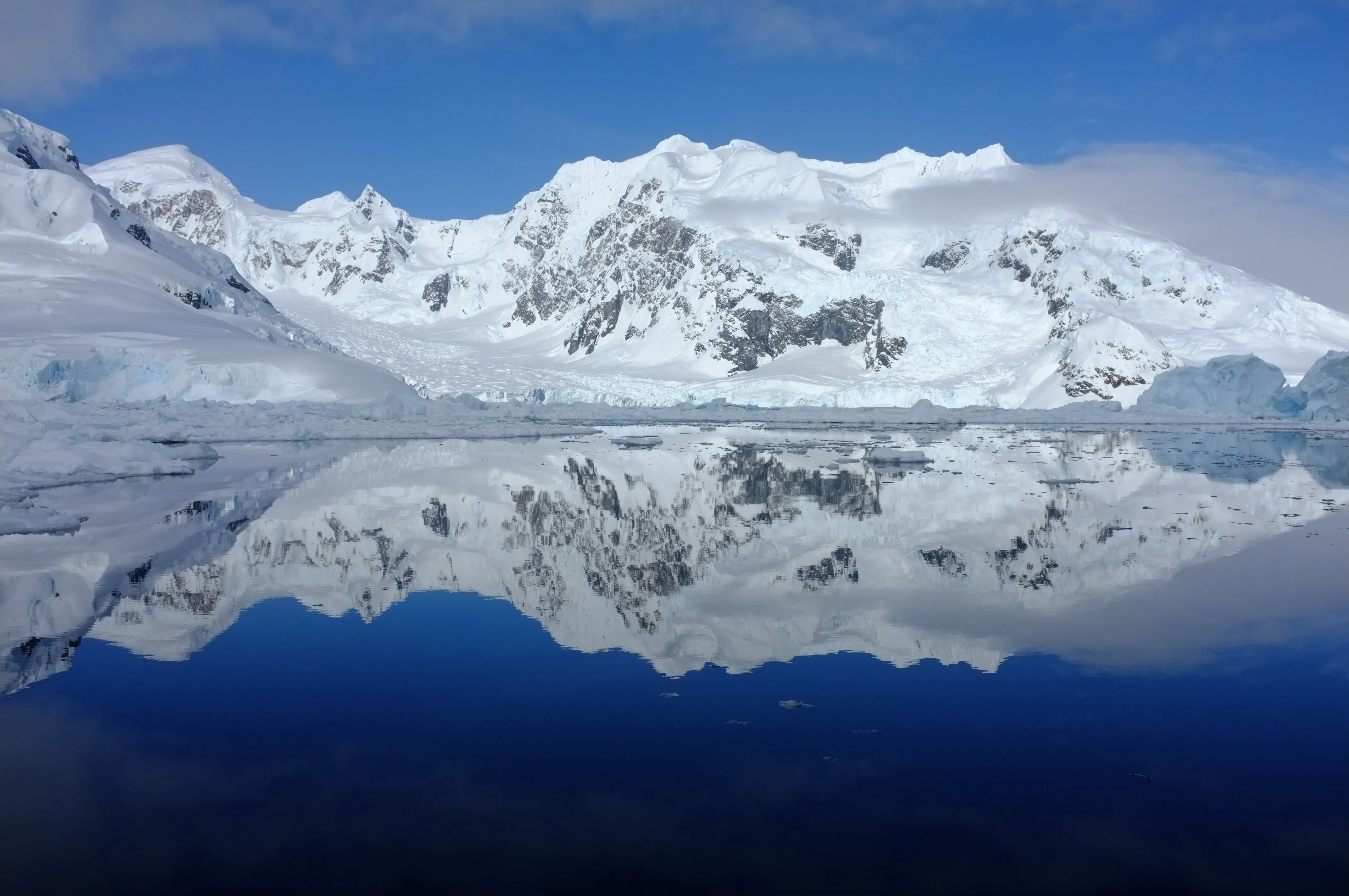
We had four days on the Peninsula, with classic continental landings at Neko Harbour, Cuverville and Portal Point, and what surprised me most was the weather. We got lucky. Some days the sky was blue and we were hiking in t-shirts and sliding down the slopes of Antarctica. Then the next day the weather turned, and soft snow came down and laid a blanket over the island we were visiting.
And the sound. People picture Antarctica as silent, and it is, but it’s the noisiest silence you’ll ever hear. Turn off the ship’s motor, sit still on deck, and it fills in around you. The wind. The creak of an iceberg. The squawk of a penguin. The blow of a whale. And everything in between.
We loved it so much.
The rock in my hand
Then came Deception Island, and it turned out to be a turning point for us.
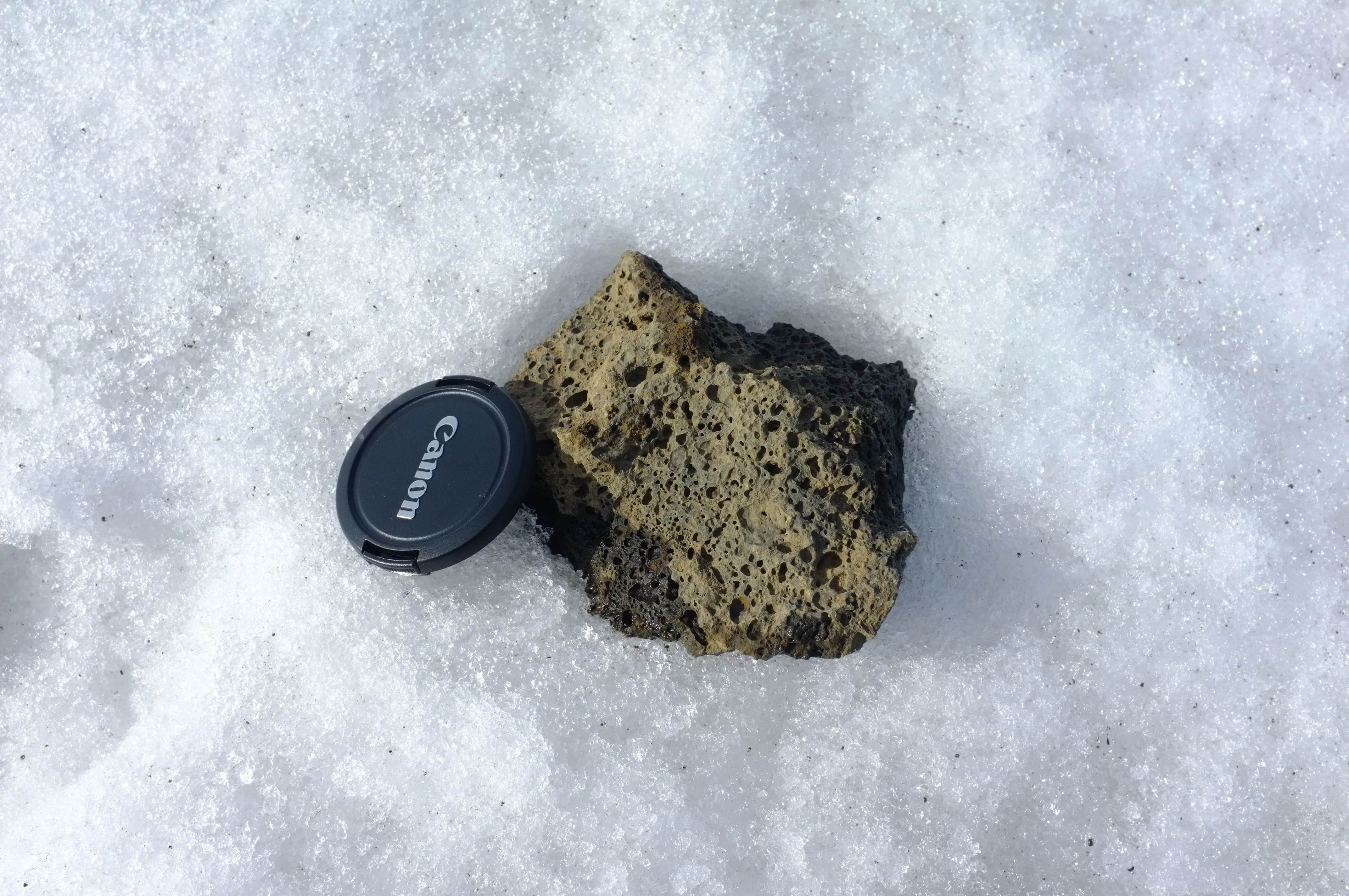
It’s an active volcano, one of the very few in the world you can sail a ship straight into, with eruptions as recent as the sixties and seventies. We were buzzing about it. On our walk, I spotted a block of basalt lying on the ground and picked it up. It was full of tiny air bubbles.
I showed it to Liz and we started trading theories about how it got there. And because I can’t help myself, I explained it out loud. The rock had been thrown out of the cinder cone so fast that the gas bubbles in the molten lava were frozen in place as it cooled, which essentially aerated the rock. That’s why this chunk of basalt in my hand was full of holes.
What I didn’t know was that one of the guides was listening.
Alex McNeill, one of the expedition leaders on the Ocean Nova, had overheard the whole thing. “Hey, you two,” he said. “You need to get up here and talk about the geology of Deception Island.” In front of everyone on board.
Liz and I were more than a little uncomfortable. Nervous, really. Then Alex sweetened the deal: a bottle of red wine.
Sold.
That night at recap, I stood up to speak in front of the whole ship. It was my first time ever speaking in public, and I was very, very nervous. But Liz is a geologist too (she did a double degree in geology and marine biology at Macquarie University, which is where we met), so we took turns. We showed photos of the different rocks we’d seen that day and we took our time, because there’s a proper story to tell.
Here’s the short version. The Antarctic Peninsula sits on tectonic plates that are slowly spreading apart, and in the Bransfield Strait the crust is getting thinner and thinner. In places it cracks, and the rock beneath melts from underneath. That’s how you get submerged volcanoes. Over time they build higher and higher until they breach the surface. Eventually a volcano goes dormant and collapses in on itself, and then you get smaller, gentler cinder eruptions. We’d seen plenty of evidence of those from the sixties and seventies, and some of the rocks we’d looked at that day came straight from them.
(Yes, I got carried away talking about cinder cones. Occupational hazard. I’m a total rock nerd.)
We had so much fun. And when we sat down, we were completely hooked.
Portal Point, after dinner
But the moment that truly sealed it came on a different night.
We’d finished dinner on board. The evening was incredibly still. And the expedition team had a surprise: a post-dinner excursion. We climbed into the Zodiacs and headed for Portal Point, one of those lovely continental landings on the Peninsula, then hiked up to a viewpoint above the bay.
I wish I could give you the view in a single sentence. Icebergs scattered across the water. Whales moving through it. Snow, penguins, and a silence over the land so complete you could hear yourself thinking.
It was profound. Liz and I stood up there and we knew. We needed to make Antarctica our life.
The call from Hawaii
Alex was our way in. He worked for Polar Latitudes and also for Quark Expeditions, and when we started asking the guides how this industry worked, and how we could come back down as guides ourselves, he was generous.
He put us in touch with Quark’s hiring manager, and we sent in our CVs for the following season.
Then we went back to being backpackers. Up the west coast of South America, through Central America and Mexico, across the US. It was a nervous wait. Looking back, I never would have guessed it would actually happen to us.
We were in Hawaii, around September, when the call came. Quark wanted us.
After some boat training, emergency medical training and developing our presentations, Liz and I went back to Antarctica the following year as expedition guides with Quark. I was hired as a presenter on geology. Liz was hired as a marine biologist. We were a package deal.
That’s how a geologist from the mines and a marine biologist from Australia started what is now a fifteen-year career in polar expedition travel.
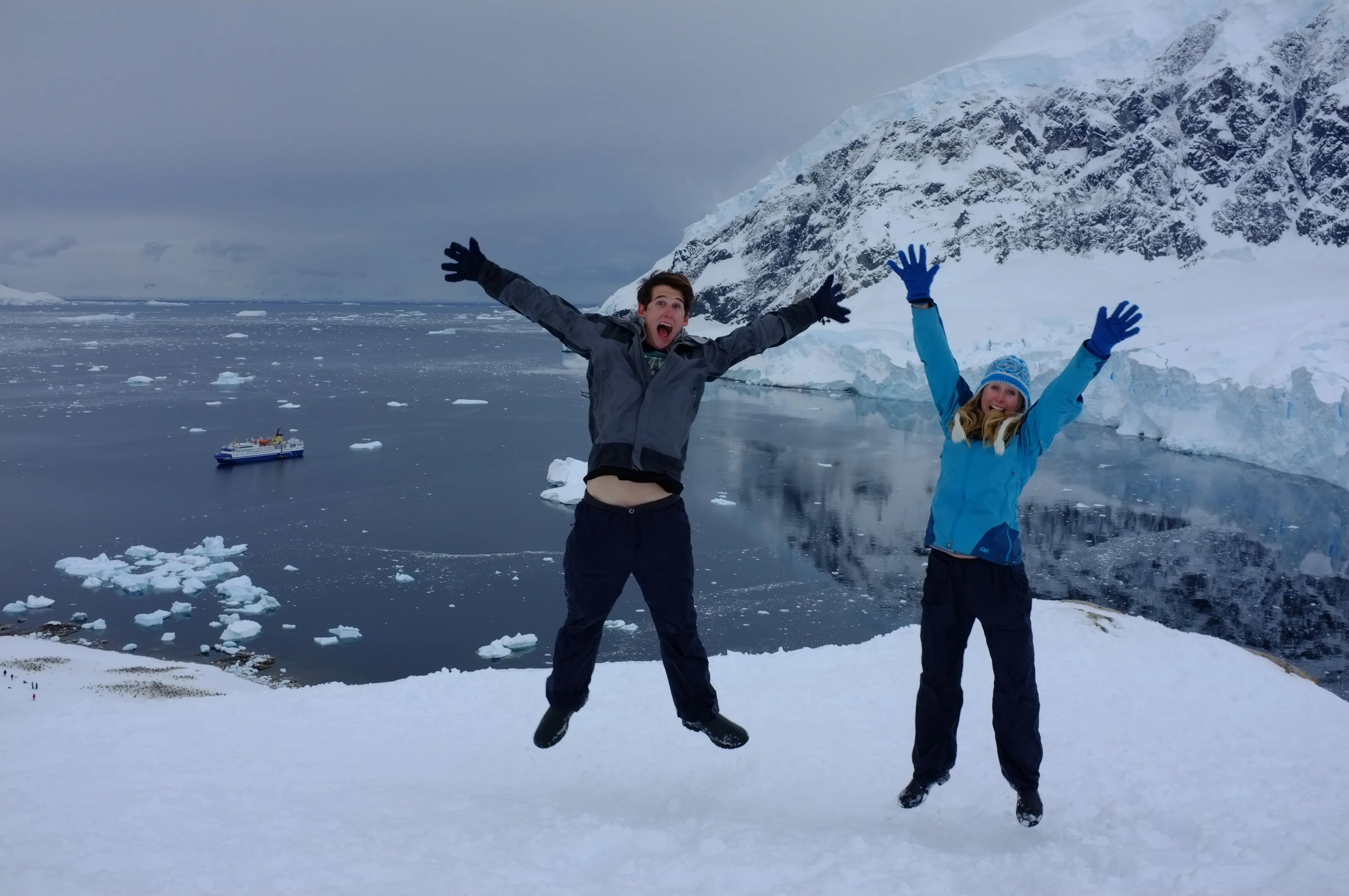
I think about how different our lives would be if we’d never made it to Ushuaia, never waited out those two weeks in a tent, never picked up that piece of basalt. The trip to Antarctica changed the whole trajectory of our lives, and it has been at the front of who we are, and the life we want to live, ever since. It’s a very special place to us. We hold it dear.
As you can probably tell, I’m completely biased. I never did go back to collecting condiments, though.